
2 US Senators Work With Prohibitionists to Stop 280E Relief Under Cannabis Rescheduling | Where to order Skittles Moonrock online
Learn where to order cannabis online. TOP QUALITY GRADE A++
Cannabyss Inc. is the best place online to buy top quality weed, cannabis, vape, marijuana and CBD products. Get your borderless orders delivered at the pickup spot with ease. Top Grade products for client satisfaction.
👉 Click here to Visit our shop! 🛒
A pair of Republican U.S. senators introduced a bill on Feb. 7 that intends to prevent licensed cannabis businesses from deducting ordinary business expenses from their taxes even if the plant gets rescheduled.
Under Section 280E of the Internal Revenue Code, cannabis businesses are unable to deduct these expenses—such as payroll, rent and utilities—from their taxable income because cannabis is a Schedule I drug under the Controlled Substance Act (CSA). Businesses dealing with Schedule II controlled substances are in the same boat.
For some of the largest cannabis companies in the U.S., the burden includes paying more than $100 million in federal taxes per year that they otherwise wouldn’t be obligated to pay in another industry.

Should cannabis be reclassified as a Schedule III substance—which the U.S. Health and Human Services Department (HHS) recommended, and the Department of Justice (DOJ) proposed under President Joe Biden’s administration—then the 280E tax burden would be eliminated, allowing cannabis companies to operate more sustainably.
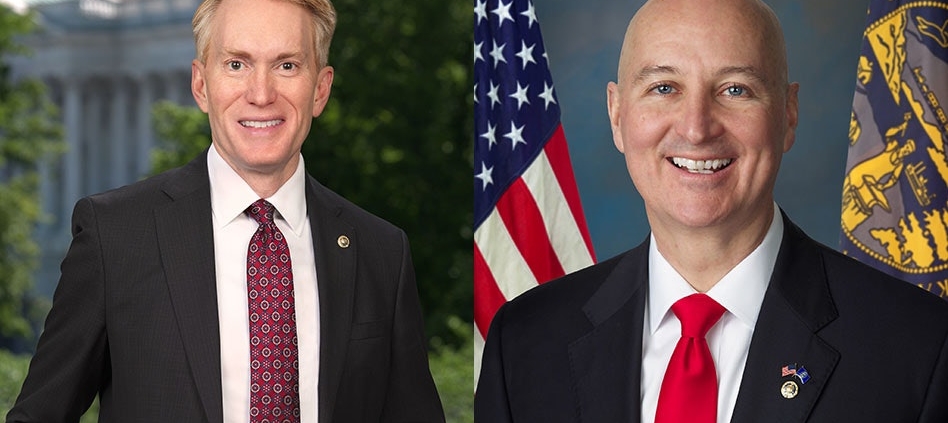
Now, as the DOJ’s rescheduling proposal remains sidelined by an interlocutory appeal, U.S. Sens. James Lankford, R-Okla., and Pete Ricketts, R-Neb., are working with prohibitionist group Smart Approaches to Marijuana (SAM) to make Section 280E a permanent hindrance to cannabis businesses, whether rescheduling happens or not.
The Senate duo filed the legislation, the “No Deductions for Marijuana Businesses Act,” on Feb. 6.
“Marijuana doesn’t make our families stronger, our streets safer, or our workplaces more productive,” Lankford said in a Feb. 7 press release announcing the introduction of his bill to block tax breaks for cannabis businesses.
“Businesses who sell federally illegal drugs—including marijuana businesses—shouldn’t get federal tax breaks,” he said. “This bill clarifies federal tax law to make sure a federally illegal product does not have a federally legal tax deduction.”
While tax law has prevented businesses involved in Schedule I or II drugs from deducting business expenses since the Tax Equity and Fiscal Responsibility Act of 1982, Lankford and Ricketts’ bill would extend that tax burden to any company whose operation involves “trafficking marijuana,” even if cannabis is relisted as a Schedule III, IV or V substance. The only way for cannabis companies to avoid 280E under their policy vision would be to have the plant descheduled entirely from the CSA.
SAM President and CEO Kevin Sabet claimed his team pitched the idea for the legislation to Lankford last year and thanked the senator for his lead.
“The federal government should not be in the business of giving tax relief to the federally illegal, addiction-for-profit marijuana industry,” Sabet said in the release from Lankford’s office. “This legislation would prevent deficit increases while ensuring that taxpayers don’t foot the bill for the revenue gap made by tax write-offs for people who choose to violate federal law and poison our kids.”
Separately, Sabet hailed the bill on social media for its intent to prevent $2.3 billion in “tax cuts” for the cannabis industry.
Sabet failed to mention that the majority of U.S. cannabis businesses are not profitable.
In 2024, just 27.3% of U.S. cannabis businesses were profitable, according to Whitney Economics’ U.S. Cannabis Business Conditions Survey report. In comparison, 65.3% of all small businesses in the U.S. are profitable.
Still, this isn’t Lankford’s first act of hostility toward the cannabis industry.
In July 2024, he and U.S. Rep. Pete Sessions, R-Texas, led a coalition of 25 GOP lawmakers in sending a letter to former Attorney General Merrick Garland condemning the DOJ’s rescheduling proposal during a 60-day public comment period.
In that letter, they claimed the HHS’ Schedule III recommendation was “based on politics, not science.” Specifically, the recommendation resulted from the HHS conducting a scientific and medical evaluation in conjunction with the U.S. Food and Drug Administration, determining that cannabis has “currently accepted medical value” and therefore does not belong in Schedule I.
Still, there is no guarantee that the federal government will reschedule cannabis under the current proposal, especially with the change in White House administrations before a final rule could be issued.
The Drug Enforcement Administration’s (DEA) chief administrative law judge, John J. Mulrooney, granted the interlocutory appeal and sent it to former DEA Administrator Anne Milgram on Jan. 15, five days before President Donald Trump took office.
On Jan. 21, the Trump administration announced that the president had appointed Derek S. Maltz as the DEA’s acting administrator.
In May 2024, when Garland signed the DOJ’s Schedule III proposal, Maltz told The Associated Press that it was “crystal clear” that the DOJ “hijacked” the rescheduling process from the DEA, “placing politics above public safety.”


Leave a Reply
Want to join the discussion?Feel free to contribute!