
Karma Koala Podcast 301: Joseph Hickey Snr – Adventures In Hemp: “Totally different from any crop out there It can house clothe feed & medicate you” Yet capital and politics conspire to control on their terms | Cannabis Law Report | How to order Skittles Moonrock online
Learn where to order Skittles Moonrock online. TOP QUALITY GRADE A++
Cannabyss Inc. is the best place online to buy top quality weed, cannabis, vape, marijuana and CBD products. Get your borderless orders delivered at the pickup spot with ease. Top Grade products for client satisfaction.
👉 Click here to Visit our shop! 🛒
https://www.podomatic.com/podcasts/karmakoalapodcast/episodes/2026-03-15T19_46_58-07_00
Another wonderful conversation for the koalas that will lead to a couple more before we leave Joseph alone!
Joseph came to hemp via a series of, as Lemony Snicket would put it, unfortunate events.
But those events led to inquisitive acts, research, political action and global connections and consolidation.
On the way he ended up in the Kentucky Governor’s office as well the state’s Supreme court along with his newfound fellow traveller, actor Woody Harrelson and also connecting with hemp activists and experts around the world.
Once again it is a story of the people vs capital and politics, but that is as it is, and Joseph’s telling of the story explains why in the end why he and all like him are on the right side of history.
I’m not one much for old testament analogies as I veer towards Mr Hitchen’s view of religion, but that being said, the story of Joseph and his coat of many colours rising from slavery to save Egypt from famine has somewhat of a hemp / cannabis ring to it.
Thankyou Joseph and I look forward to our next chat to discuss all those things happening in hemp at the moment that give us reason the celebrate.

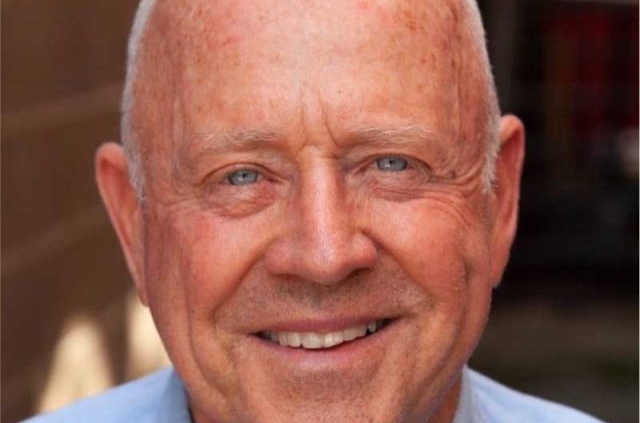
Joe Hickey, Sr
Joe has a rich history in innovative technology development and has been instrumental in the reintroduction of the industrial hemp industry in America. Beginning in 1993 when he founded and served as Executive Director of the 1942 Kentucky Hemp Growers Cooperative.
In 1994, Joe and actor/environmental activist Woody Harrelson co-founded a company focused on identifying and funding innovative technologies that promote environmental sustainability. Driven by the belief that “to know the law, you have to test the law,” Joe’s passion for making the world a better place led him to challenge Kentucky’s hemp laws. In collaboration with Woody Harrelson, he orchestrated the planting of four hemp seeds in the hills of Kentucky.
This bold action helped pave the way for the reintroduction of hemp into the U.S. agricultural landscape, cementing Joe’s role as a hemp pioneer. During this pivotal period, Joe reorganized the Kentucky Hemp Growers Co-op, worked with Governor Jones to establish Kentucky’s Hemp Task Force, and organized the first International Hemp Conference. He played a key role in securing support for hemp from both Kentucky’s and the National Farm Bureau.
Joe was also a founding board member of Kenex, the first commercial industrial hemp operation in Canada, and contributed to drafting and passing Kentucky’s hemp legislation.. Joe is a founding board member of the re-incorporated Kentucky Hemp Growers Co-op Association est.1942, and is a current or former board member of; Friends of Hemp, Federation of International Hemp Organization (FIHO), Kentucky Hemp Association, U.S. Standing Committee of Hemp Organization, National Hemp Growers Association, Kentucky Hemp Growers Cooperative Association and a member of the National Industrial Hemp Council of America.
Also see a selection of documents and videos covering some of the things we speak about in the podcast
In 1937, legislation was pushed through which made it virtually impossible to grow hemp in the US. The Marijuana Tax Act was an attempt to control the transfer of Cannabis by taxing producers and handlers. It was assumed that no one would incriminate himself by buying a tax stamp. This law was, eventually ruled to be unconstitutional by the US Supreme Court. But the result was that hemp and hemp production was made to be a crime. These government regulations ushered in the prohibition of hemp, as well as the “evil weed”.
However, this government policy regarding hemp was soon forgotten and ignored by the Feds, as a new, more serious threat emerged, World War II. As supplies of imported line fiber diminished due to the unreliability of foreign supply, hemp was recruited into service. American citizens at home were recruited into schemes to produce this, once again, valuable crop and it’s products. So, in less than five years the National consciousness and conscience was amended, temporarily, as the reality of hemp’s value superseded a political agenda.
In 1941 a directive from the War Department established a production scheme to re-supply fiber for the National defense. Forty-two hemp mills were eventually built, throughout the Midwest, and four thousand acres, surrounding each mill, contracted for the growing of hemp. The Federal government established special corporations to handle the project, but most of the real work was done at the state and county level. As you will see, the Federal government’s limited involvement would prove beneficial when they would suddenly cut these programs.
Suddenly, hemp was good again: and essential to the Nation at war. Hemp was promoted by two methods: appeals to patriotism and cash. Soon hemp was growing in the fields and the mills starting production. Hemp was represented as a “new” major agricultural industry at a time when agronomists were looking for alternative crops. It could have been the start of a profitable new industry for American hemp producers; it turned out to be, ultimately, a waste of resources, natural and human.
This is the story of one American community’s experience with the War Hemp program; it’s hopes, dreams and desires, reduced to a faint memory. Perhaps for some interests this whole episode was best forgotten, but now almost 60 years later, we have the full story from the perspective of one, hemp community.
Clinton Executive Order
Clinton eo 12919 june 3 94 national defense industrial resources preparedness
Congressional Research Document – Hemp as an Agricultural Commodity Updated July 9, 2018
congresional research service hemp as an ag commodity
United States Court of Appeals For the Sixth Circuit: Donna Cockrel (Plaintiff Appellant) vs Shelby County School District et al (Defendants Appellees)
Decided November 9 2001
Re firing of teacher who hosted Woody Harrelson talk on hemp
firing of teacher who invited woody harrelson school hemp
FIND LAW
COMMONWEALTH v. HARRELSON (2000) Supreme Court of Kentucky.
COMMONWEALTH of Kentucky, Appellant, v. Woody HARRELSON, Appellee.
No. 1998-SC-1048-DG.
Decided: March 23, 2000
A.B. Chandler III, Attorney General of Kentucky, Frankfort, Thomas P. Jones, Special Assistant Attorney General, Beattyville, for appellant. R. Burl McCoy, Charles E. Beal II, Tonya S. Conner, McCoy & West, Lexington, for appellee.
This appeal is from a decision of the Court of Appeals vacating the judgment of the Lee Circuit Court which affirmed a ruling by the Lee District Court finding that the definition of marijuana in KRS 218A.010(12) is unconstitutionally overbroad. The Court of Appeals remanded the case to the circuit court with directions to dismiss the appeal on the ground that it was taken from a nonfinal order.
The major issue is whether the decision of the Lee District Court which held that KRS 218A.010(12) was unconstitutional is correct. Other questions presented are whether the circuit court erred in affirming the judgment of the Lee District Court; whether the circuit court erred in affirming a finding that a viable economic benefit could be derived from the nonhallucinogenic parts of the marijuana; whether the entire matter should be dismissed for territorial procedural defects and whether the appeal was taken from a nonfinal order of the district court.
The facts of this matter are not in dispute. On June 1, 1996, Woodrow Harrelson planted four hemp seeds on a tract of land in rural Lee County. He was cited and arrested for a violation of KRS 218A.1423(3), cultivation of marijuana, five or fewer plants, a Class A misdemeanor. The charge was later amended to possession of marijuana, KRS 218A.1422, also a Class A misdemeanor. He pled not guilty and moved to dismiss the charge contending that the hemp seeds did not come within a proper statutory definition of marijuana, or, if they did, that the statute was unconstitutionally overbroad and vague.
https://caselaw.findlaw.com/court/ky-supreme-court/1172575.html
Woody Harrelson’s Kentucky hemp battle, 2000
Posted on March 22, 2017

Actor Woody Harrelson celebrated his not-guilty verdict with supporters outside Lee County District Court on Aug. 24, 2000, in Beattyville. Harrelson was on trial for possession of marijuana after he symbolically planted four hemp seeds in 1996 in a rural Lee County field. Harrelson said the seeds he planted had a lower THC content, and he was challenging the constitutionality of Kentucky’s marijuana laws and trying to bring attention to the uses of growing hemp. At the time, the state legislature said hemp and marijuana are the same, and the state’s highest court agreed. But five women and one man from Lee County said Harrelson didn’t break the law when he planted the seeds in protest. The jury took only 20 minutes to find Harrelson not guilty of a misdemeanor charge of possession of marijuana. “That wasn’t marijuana he planted, if he planted anything,” juror Sylvia Caldwell said as she left Lee District Court with Harrelson’s autograph on a piece of hemp paper. Outside the courthouse, a crowd of cheering, squealing fans waited for the 39-year-old actor in the dark hemp suit. They carried hand-lettered signs that said “We support hemp.” The decision flew in the face of a law passed by the General Assembly in 1992 and upheld by a unanimous state Supreme Court. It also ended a case that began June 1, 1996, when Harrelson wielded a grubbing hoe to challenge the law, which didn’t distinguish between marijuana and hemp. The latter contains only a minute amount of the psychoactive ingredient that gives marijuana smokers a high. In 2013, the state passed a law allowing production for agricultural research purposes. The federal Agricultural Act of 2014 removed federal restrictions aimed at growing industrial hemp and allowed states that have legalized its manufacturing to set up research programs to study the benefits of cultivating it. Photo by Janet Worne | Staff
Source: https://kyphotoarchive.com/2017/03/22/woody-harrelsons-kentucky-hemp-battle-2000/
George Washington Carver and Henry Ford Shared a Bio-fuel (Ethanol) Vision

Though worlds apart, George Washington Carver and Henry Ford shared a vision of a future in which agricultural products would be put to new uses to create products and industries.
One idea both men worked on more than 60 years ago — biofuels — is again in vogue as America seeks to reduce its dependence on foreign oil.
“Henry Ford was ahead of his time on this. He knew he needed fuel for transportation, and if he could develop something that was good for agriculture too, it would be a good match,” said Dick Baker, a tech leader at Ford’s powertrain, research and advanced engineering department.
“Henry also knew of Carver’s work and said ‘that’s somebody I need to learn more about,’ ” said Baker.
That was because Carver, born a slave in Missouri during the Civil War, had become a world-famous botanist by the 1930s, famed for his research into the many uses of peanuts, soybeans and other plants. Over the years, Carver promoted the idea that such plants could be turned into plastics, paint, fuel and other products.
Ford was interested in the same things. Besides his legendary work creating plastic car parts derived from soybeans, Ford had long believed that ethanol (or grain alcohol) should be produced as an alternative fuel.
“All the world is waiting for a substitute for gasoline,” Ford said in 1916. “The day is not far distant when, for every one of those barrels of gasoline, a barrel of alcohol must be substituted.”
During the early days of Prohibition, he even suggested turning Michigan’s idled breweries into distilleries to make denatured alcohol for fuel in cars and trucks, noted historian Ford Bryan. That went nowhere since Prohibition doomed the idea of any large-scale switch to alcohol production.
The automaker learned of Carver following his donations to the Tuskegee Institute (now Tuskegee University) in Alabama where the botanist was a faculty member, Bryan said. READ MORE


Leave a Reply
Want to join the discussion?Feel free to contribute!