
Dr. Gil Fanciullo: How Medical Cannabis Entered Modern Practice – Ganjapreneur | How to buy Skittles Moonrock online
Learn how to buy CBD online. TOP QUALITY GRADE A++
Cannabyss Inc. is the best place online to buy top quality weed, cannabis, vape, marijuana and CBD products. Get your borderless orders delivered at the pickup spot with ease. Top Grade products for client satisfaction.
👉 Click here to Visit our shop! 🛒
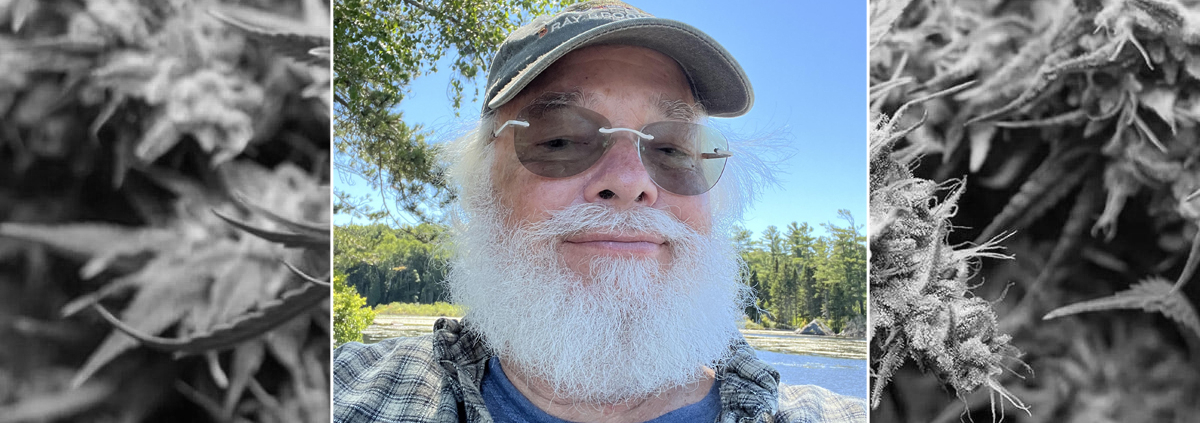
In this episode of The Ganjapreneur Podcast, host TG Branfalt speaks with Dr. Gil Fanciullo, a longtime physician specializing in pain management and palliative care, about his early experiences recommending cannabis to patients well before it was legally accepted. Drawing from decades in medicine, including his work at Dartmouth-Hitchcock Medical Center, Fanciullo reflects on the risks physicians once faced, the patient-driven origins of medical cannabis adoption, and how attitudes within the medical community have evolved over time.
This interview explores the gaps that still exist in cannabis research, the complexities of cannabinoids and the so-called “entourage effect,” and the role cannabis could play in reducing reliance on pharmaceuticals like opioids. Fanciullo also discusses physician education, regulatory barriers, and what federal rescheduling could mean for both medical practice and the broader cannabis industry. Listen to the full episode below, or wherever you get your podcasts!
Listen to the episode:
Read the transcript:
TG Branfalt (00:06):
Hey there. I’m your host, TG Branfalt, and this is the Ganjapreneur.com podcast where we try to bring you actionable information and normalize cannabis through the stories of entrepreneurs, activists, and industry stakeholders. Today, I am joined by Dr. Gil Fanciullo. He’s Professor Emeritus Dartmouth Medical School, former director of pain medicine and section of hospice and palliative medicine, Dartmouth-Hitchcock Medical Center. Dr. Fanciullo has authorized medical cannabis for patients in New Hampshire, helping shape the state’s law’s legislative advisor and served as chief medical officer for two New Hampshire dispensaries. How are you doing this afternoon, Dr. Gil?
Dr. Gil Fanciullo (00:44):
Doing well, TG. How are you?
TG Branfalt (00:46):
I’m cool, man. Cool. So just a little bit of background for our listeners. Dr. Gill and I met very recently in an unrelated manner. And I was sort of rummaging through his basement and found the sign. And it was basically for a medical conference decade ago. And so I asked him, “What’s this all about? ” And he started telling me, and I just had to get his perspective being someone who was really early in the medical side in the Northeast. And so I’m delighted for him to be able to share a story and for me to actually get to learn a bit more. So before we get into all of that, tell me about your background and a bit about your medical career and how you ended up on the topic and working with medical cannabis and patients.
Dr. Gil Fanciullo (01:42):
I was born in Staten Island, New York. I became a physician’s assistant and moved up to the Adirondacks and practiced as a physician assistant for about five years in the mid to late 1970s. I really could not work for doctors. The doctors that I worked for tortured me too much. And so I decided to go to medical school and I ended up going to medical school at Albany Medical College, specialized in anesthesiology, got interested in pain medicine as an anesthesiologist, and ultimately got interested in hospice and palliative medicine as an anesthesiologist as well. Started the section of pain medicine at Dartmouth-Hitchcock Medical Center and started the section of hospice and palliative medicine at Dartmouth-Hitchcock Medical Center, where I am still an emeritus professor at Dartmouth Medical School.
TG Branfalt (02:34):
And about what year did you start this section?
Dr. Gil Fanciullo (02:39):
Palliative medicine was probably around 2013, 2012, and pain medicine was in the late ’90s.
TG Branfalt (02:49):
Awesome, man. So tell me a bit about your experience as a physician as it related to medical cannabis, especially these early days.
Dr. Gil Fanciullo (02:58):
Yeah, I can distinctly recall even as a PA, probably in 1997 or 1998, I was working in Tupper Lake, New York, and we had patients who obviously came in dying of cancer. And it was not unusual for me to recommend cannabis to those patients. Now, to illustrate, even in 2019 in New Hampshire, there were about 10,000 physicians. And even after years of the physician’s ability to recommend cannabis for a variety of symptoms, only about 800 physicians had ever recommended cannabis, even for a single physician. So it was not a popular thing to do back in the ’90s, but it was just … And it’s part of the effect of the fact that cannabis use, medical cannabis, was a patient generated movement. And so my patients would come in, they’d come in with intractable pain, they’d come in with insomnia, they’d come in with anxiety, all of those symptoms, and I would recommend cannabis.
(04:11):
And generally, these patients were elderly patients, much like myself now, and they would say, “Well, where are we supposed to get the cannabis from?” And I just said, “Ask your grandchildren.” And they asked their grandchildren and the grandkids got them cannabis and they did get relief of their symptoms from medical cannabis. And so that did sort of engender this interest in medical cannabis for me, even to this date.
TG Branfalt (04:37):
And so when you’re recommending those patients, how did you personally come to that sort of determination that this is good for patients? Because my wife is a physician and I mean, they don’t teach, and especially back then, I’m sure they didn’t teach anything about medical cannabis. So how did your interest become piqued and your understanding of this morph and evolve?
Dr. Gil Fanciullo (05:02):
I think it was just through reading and it was probably … And again, I can’t recall specifically, but I would guess that it was non-scientific reading because there’s been an embargo on cannabis research since essentially 1937, which is a whole curious other story, which I’m sure you’re familiar with, but there’s been no research. And so there aren’t articles published about medical cannabis, certainly not in the late 1990s. And even today, those articles are few and far between.
TG Branfalt (05:41):
Well, you’ve published a couple of articles regarding medical cannabis. Could you tell me about a couple of those and briefly describe what you were researching and what your conclusions were?
Dr. Gil Fanciullo (05:52):
Sure. So the articles that I am most proud of are guidelines for the use of medical cannabis in patients in the United States, which was published by the American Pain Society and the American Academy of Pain Medicine. And I’ve been an officer in both of those national organizations. And so I co-wrote a paper just simply describing what the evidence-based foundation was for the use of cannabis for a variety of symptoms. And the other article had to do with the same thing. It was published at about the same time, and it had to do with where are the principle research gaps? Where are the areas that more research is so essentially needed for the use of cannabis? So those are the two things that I’m most proud of.
TG Branfalt (06:49):
And where did you identify are those gaps?
Dr. Gil Fanciullo (06:52):
Oh my God, it’s beyond belief. Let me put it this way. Valium, which most people are familiar with, is an anti-anxiety medicine. And Valium has metabolically active end products. So when your body breaks down and metabolizes Valium, it produces other drugs. And it turns out those other drugs are drugs that are now marketed. For example, Librium, Xanax, Restaril, a whole string of different benzodiazepines that all derive from the use of Valium. Now, cannabis has what are called cannabinoids. These are substances that bind to receptors in our body that stimulate certain processes and all of them different. And there are over a hundred different cannabinoids in cannabis. Some of them we know something about, some of them we know nothing about. In addition to the cannabinoids, there are what are called terpenes. Now, terpenes, I have a feeling that you and both, and many of your listeners are familiar with these too, but terpenes are other substances that are contained in medical cannabis or any kind of cannabis, excuse me, that give it its sort of aroma.
(08:08):
And terpenes, for example, alpha-pinene. So pinene is what gives pine trees their distinctive smell. And it also helps give the odor to oregano and parsley and other drugs like that. Lemonine is another terpene, and that’s what gives the smell to lemons, that lemony smell to lemons. So there are more than a hundred terpenes in cannabis as well. And there are other agents too. So there are probably 500 different chemicals contained in what you smoke when you smoke cannabis. Now, to make that even more interesting, and I know we’re talking about research here, but to make that even more interesting, there’s what’s been called the entourage effect. And this was described by a very famous Israeli researcher by the name of Raphael Machulam, who’s just an amazing guy. He made just a number of discoveries, but the entourage effect means … So you have a drug like Marinol, which is available in the United States, which is pure THC, and it’s used for appetite stimulation.
(09:18):
It sort of works, but if you combine Marinol, if you combine THC, the drug and Marinol with CBD, or you combine it with CBG or one of the other cannabinoids or some combination of those cannabinoids, you get a level of effectiveness that far exceeds the effectiveness of THC alone. And so we have no idea what combinations of drugs that are contained in cannabis might have therapeutic effects. That’s the entourage effect. The other effect, which is economically important as well, is what’s called pleotropy, P-L-E-I-T-R-O-P-Y. And what pleotropy means is that one drug may have more than one therapeutic effect. So cannabis not only reduces pain, reduces anxiety, increases your ability to sleep, may reduce constipation, there’s a whole string of effects that pleotropy incorporates. And this is all research. I mean, there’s no research really to describe this at all, but you can see how the pharmaceutical companies would hate this because right now they’re making money by selling Oxycontin and Xanax and Restteril, all these different drugs.
(10:37):
So a patient may be taking four different drugs to help them with their sleep, to help them with their anxiety, to help them with their pain. And you could treat all of those symptoms just by using cannabis. And so can you see the extrapolation of literally thousands and thousands of studies that could be done just on that effect alone? And then even the simplest studies like, is cannabis useful for multiple sclerosis? Well, it turns out that some very … The way they describe the studies in very strict scientific literature is that there’s low or indeterminate evidence to support the fact that cannabis is useful for multiple sclerosis. And this is only really because of the embargo on research once again.
(11:30):
But you could use a single drug, you could use cannabis to treat all the symptoms I mentioned earlier plus spasticity, plus urinary inconfidence. There are a variety of symptoms that you can use to treat. So the investigation of cannabis’s usefulness in any one of hundreds of single diseases, it just ultimately needs to be done. It’s not being done yet. And I know you know this too, and I’m sure your listeners do too, but it just astounds me when I rediscover every time I think about it, the fact that cannabis was in the US pharmacopeia. It was used as a drug in the 1930s, and there were probably 20 commercially available cannabis drugs that were available in the United States, and they all got taken off the market in 1937. When I can never remember the name of the law, it was called like the Tax Act or
TG Branfalt (12:31):
Something. Yeah, the Marijuana Tax Act.
Dr. Gil Fanciullo (12:33):
Marijuana Tax Act came around. And the Marijuana Tax Act was primarily instigated, many believe, by the textile industry, because hemp was such a useful article for clothing and for rope making and for net making and all these different things. And other industries, the cotton industry, for example, did not want hemp to be useful. So cannabis became illegal primarily based on that fact. But the opportunities for research, I mean, I’m going to stop and you can ask me specific questions if you want, but I could go on for hours and have gone on for hours about potential studies. I mean, one of the most interesting studies, and Timmy, please stop me if I’m going-
TG Branfalt (13:19):
No, man. I’m here to hear
Dr. Gil Fanciullo (13:22):
It. Okay. One of the most interesting studies, there’s so many, but look at the IRC, the International Olympic Committee, which still considers cannabis illegal-
TG Branfalt (13:37):
Performance enhancing drug.
Dr. Gil Fanciullo (13:38):
Exactly. A performance enhancing drug. And then look at the NFL and the NBA and professional baseball associations and what their response to cannabis has been. The NFL, for example, I believe the last time I looked, and I believe it’s still true, they only test for cannabis one time a year, and it’s during spring training. And after
TG Branfalt (14:00):
That, they- you can no longer get banned for cannabis either. They just updated their policies.
Dr. Gil Fanciullo (14:07):
Excellent. And so they only tested one time anyway, and this is for the last probably six or seven years, and people like Rob Gronkowski, the former receiver for either the loved or hated New England Patriots team, was a regular proponent of cannabis used and used cannabis regularly for chronic pain. Where I was going with this was another study that was done by Raphael Machulam, where he had brain injured animals and found that pretreated animals, animals that were pretreated with cannabis had decreased area of the brain injured during trauma. And so when you think about chronic traumatic encephalopathy in the NFL, and you think that cannabis may be protective against brain injury, it raises the next research question. Can cannabis use and potentially microdosing of cannabis, who knows what the dose is, but cannabis use mitigate against chronic traumatic encephalopathy in brain injuries? And so when the ambulance comes to your house, when you’ve been in a motor vehicle accident, or have a heart attack, because the same thing has been shown to be true with heart muscle.
(15:26):
So the amount of heart that is damaged in cannabis pretreated animals when occlusion of an artery occurs, like with a heart attack, then the amount of muscle that’s damaged is less. So when you get picked up by the ambulance and they’re not sure exactly what’s going on, they put a baby aspirin under your tongue, and the next thing they’ll do is they’ll put a little cannabis tablet under your tongue to protect your heart and to protect your brain. Who knows?
(15:54):
And we could be doing this now and it might be useful and it might not be useful, but we need to conduct the research to find out if that’s true or not.
TG Branfalt (16:02):
So yeah, I mean, it’s amazing how much the conversation has changed just in the wake of adult use legalization where MLB had a hemp sponsor, a CBD sponsor last season. I’m not sure if that agreement still exists. So I do want to ask you, what were the conversations, what did they look like in the medical community when you were doing the pain medicine and palliative care and during the first wave of medical cannabis legalization, what did those conversations look like? Can you peel behind the curtain a little bit?
Dr. Gil Fanciullo (16:36):
Yeah, I mean, they were all over the place, obviously, but you could look at why is cannabis a schedule one drug? So drugs are divided into five schedules that number one is the most dangerous, and that’s where you have heroin, for example, is a category one drug, class one drug. So doctors are not allowed to prescribe cannabis, and they’re placed into this category primarily for three reasons. And I’m hoping I’m going to remember what those three reasons are, but one reason is because they’re addictive. The second reason is because there is no known medical indication. And the third reason is that the risks that outweigh the benefits, that they’re dangerous to take in and of themselves. So the first risk is … And these were the same conversations we were having back in the ’70s, is cannabis addictive? And I think there’s no question that for a subset of patients, cannabis is addictive.
(17:36):
But if you take adult use cannabis in patients who have no prior history of addiction and are taking cannabis for a medical indication, then your 50-year-old who comes in with arthritis and has never smoked marijuana before, never had addiction problems before, that person is at very, very low risk for developing a problem with addiction, very low risk. If you take a 13-year-old who uses cannabis every day, that person might be at slightly higher, I shouldn’t say slightly, probably is at a higher risk for developing a problem with addiction. But you can see that for the medical use, it’s a generally safe from an addiction perspective drug. The second fact is medical indications, like are there medical indications for the use of cannabis? And I said already that the evidence is low to intermediate strength because of the embargo on cannabis research. However, most physicians are convinced that cannabis is useful for a whole variety of different symptoms and pain, insomnia, anxiety, we could go on and on.
(18:42):
And the third is the third reason, and we were having these same discussions back in the ’70s, is there danger associated with … Does the drug cause lung cancer? Does the drug cause head and neck cancer? Does the drug cause urinary tract cancer like cigarettes do? Because when you smoke a cigarette, the carcinogens that are produced when you vaporize nicotine or when you, excuse me, ignite nicotine are almost identical to the constituents in cannabis when you ignite cannabis. But the differences are, as it turns out, of course, the drug is safe. Nobody has ever overdosed on cannabis and animal studies have been done that would be equivalent to giving about 800,000 milligrams of cannabis to a 200 kilogram person, and that person was very sleepy, or that animal was very sleepy, but there was no liver damage, no kidney damage. They woke up, they didn’t die.
(19:47):
So the drug from a dosing perspective is extremely safe. I lost my train of thought there. Can you redirect me a little
TG Branfalt (19:58):
Bit? No, no. So what were the conversations like? Did any of your colleagues, for example, who may know that you were recommending that patients use cannabis and kind of saying, I mean, jokingly you said getting it from your grandparents, did any of them just so strongly oppose this position or was there maybe not a tacit agreement, but quietly were people like, “Maybe this is
Dr. Gil Fanciullo (20:28):
Right?” The answer to that is many physicians, probably most physicians at that time would be horrified to learn that I was recommending cannabis for my cancer patients. Really? If that got out, I was one of the first PAs to ever work in the state of New York. And if that got out, it could jeopardize my job, it could jeopardize my license, it could jeopardize so many things. So
TG Branfalt (20:59):
Why were you willing to take that risk?
Dr. Gil Fanciullo (21:03):
It’s not because I’m inherently brave or courageous or anything like that, I don’t think, but I just think because it was useful, you’re face-to-face with people who are suffering and you don’t have a tool in your armamentarium to relieve their suffering. And so I was just willing to have them try something else. And plus, I was personally acquainted with cannabis. I smoked cannabis when I was in high school. I stopped smoking for 30 years when I was in the Navy and when I was a physician essentially, but I use cannabis now to treat my arthritis. I have rheumatoid arthritis and arthritis that most 74-year-olds have, and it’s incredibly useful. If I take Motrin, I have all kinds of risks and it usually relieves my pain, but if I use cannabis, I have no risks and it completely, it just makes my pain go to zero, which is amazing.
TG Branfalt (22:08):
So may I ask, what delivery method do you personally utilize?
Dr. Gil Fanciullo (22:14):
I use gummies or tincture. It’s interesting because cannabis … Oh, this might’ve been where I was going earlier, but with the head and neck stuff, but cannabis has been shown not to, again, low to intermediate evidence, but has been shown not to cause lung cancer and not to cause lung disease. So it doesn’t cause emphysema, but it can irritate large airways like the trachea and the bronchioles. And I did probably a year or two ago develop chronic bronchitis from inhaling cannabis smoke. And so that coughing that occurs when you take too big a hit was occurring and didn’t go away for weeks or months. So I essentially stopped smoking cannabis because of that and use gummies now. But it does … I use cannabis recreationally too, and gummies don’t produce the same effects that inhaled cannabis does,
(23:13):
Because with inhaled cannabis, you have almost immediate onset. It’s like a five-minute onset. The blood levels are extremely high, and then it goes away within two or three hours. With gummies, it can take a couple hours for those gummies to fully exert the desired effect. You never get that same peak effect, and the effect can last even into the next day. But what I was going to talk about again, remember last time I said … Where was I? Where I was going, I think, was that the fact that for cancer. So when you smoke cigarettes, if you smoke a pack of cigarettes a day for 10 years, that’s 3,650 cigarettes in 10 years. If you smoke cannabis, a joint … No, I got that wrong. If you smoke cannabis, that’s 3,650 joints in 10 years, 365 joints a year, 3,650 in 10 years. If you smoke cigarettes, if you smoke a pack of cigarettes a day, you’re smoking 73,000 cigarettes in 10 years.
(24:27):
And so you’re getting much lower dose of the carcinogens, the substances that can cause cancer when you smoke cannabis than when you smoke cigarettes. And there have been big sort of … They’re called post-marketing surveillance studies, essentially. And what that means is when a new drug is approved by the FDA, you have all these studies that have been done to show its effectiveness, and then you do what are called post-marketing surveillance studies. So anytime there’s a major side effect of a drug, it gets reported. And if you have a drug, if you’re doing a study on a hundred patients, that’s different than administering the drug to 10,000 patients. And so this is a post-marketing surveillance study. So different cancers or other problems that occur once the drug has hit the market. So none of the preliminary studies have ever been done with cannabis, but talk about post-marketing surveillance studies.
(25:22):
I mean, the drug’s been used for at least 3000 years, and some people will say longer. So we have 3000 years of post-marketing surveillance studies where people have used cannabis often and they don’t report any increased risk of cancer. So big studies have looked at head and neck cancer, which tobacco essentially causes versus cannabis, and cannabis does not cause it. As well as I already mentioned, lung cancer, heart disease, heart attacks, et cetera, et cetera. Cannabis can increase your heart rate transiently when you first start to use it. So if you had a patient that had cardiac disease and you wanted to treat them with cannabis and they weren’t already on a drug that was slow in their heart rate, the maximum simply is go low and go slow. Just start out with a very low dose, monitor them, and you’ll be okay.
TG Branfalt (26:22):
So I do want to ask, there’s two types, and I’m sure you know this, of medical cannabis programs, one in which relies on qualifying conditions lists, which obviously have a list of conditions that physicians can use cannabis. And then there’s others that allow physician discretion. I’m just wanting to know your take on that as somebody who, again, was recommending cannabis without any legal sort of status to be able to do so. Which of those programs do you support?
Dr. Gil Fanciullo (27:00):
I totally and unquestionably support the use of cannabis at the physician’s discretion or the nurse practitioner’s discretion or the physician’s assistant’s discretion because it’s easy to say, okay, we can use cannabis for chronic pain. But what if you have something called Dravits syndrome, D-R-A-V-U-T-S syndrome, which is a type of childhood epilepsy that it turns out cannabis is very useful for? Do you have to actually have an indication for … You’re never going to have those indications for these rare syndromes where there are maybe 20 people in the whole country who have these diseases. So what do you do when this patient turns up in your office who you think could benefit from the use of cannabis, but doesn’t have a listed qualifying condition? Yeah, so it’s absurd to think that you could have a list of qualifying conditions. It should be at the physician’s discretion to use the drug whenever he or she thinks it might be useful.
TG Branfalt (28:02):
So you had said that you had to help develop recommendations for state programs, and you were a legislative advisor in Vermont, is that correct?
Dr. Gil Fanciullo (28:11):
That’s correct. And in New Hampshire.
TG Branfalt:
And in New Hampshire. So tell me about that experience in crafting, working with lawmakers in a lot of ways, have been opposed for decades against reforms. What was that like and what were the sort of big questions that were being asked by lawmakers, legislators?
Dr. Gil Fanciullo (28:35):
Yeah, that’s an interesting question because in effect, when we did that type of work, we worked with committees of physicians, and so there would be 10 physicians that were selected by the state to serve on these committees to make recommendations to the state. And most of the debate and most of the problems had to do with the physicians on the committee. So for example, you could have a physician, and I won’t mention his name, but who was one of the original Purdue Pharma controlled physicians who was very pro- opioid and very anti-cannabis, and that physician could be on your committee, or you could have a physician on your committee, and I’m thinking of very specific people who served on these committees who was so into every bit of minutiae, did not believe that lower intermediate evidence was useful in any way, shape, or form, and wanted to see double-blind, prospective, randomized clinical trials before she would agree to make a recommendation regarding a drug.
(29:50):
And those physicians were common. Those physicians were very common, very common on both on … So it was dealing with Those physicians, I think, which was really the biggest obstacle. So modern medicine had to come around, which it still hasn’t completely, but modern medicine would have to come around before we could make those recommendations to the states. And the recommendations to the states were almost always watered down by these very conservative physicians and plus citizen advocates. I mean, anytime we made a recommendation, those recommendations were public and there would be hearings where the public could give their opinions about your recommendations. And I say this without exaggeration, there were citizens who traveled from state to state to state who were anti-cannabis because their son or daughter died from a heroin overdose and they started with cannabis. And so they were so anti-cannabis and they were very effective witnesses to the legislatures.
(31:04):
And often with the state legislatures, you really needed to have one or two advocates in the legislature who could advocate to their colleagues in the legislature and could try to convince or propose the bills that might be reasonably pro- cannabis. And so part of the process was trying to identify who those people were and to talk to them as well.
TG Branfalt (31:37):
Interesting. I do want to switch gears a little bit. You had discussed the 3,000 plus year history that we have with cannabis use. You worked in palliative care with dying patients. There’s evidence that cannabis has been used for millennia in death rituals. We have evidence in Asia of burial sites which they burned cannabis. They found evidence of burned cannabis in these alters and throughout the world that this is being seen. We have history of cannabis being used formalities. If you go back to the Roman Empire and in the sort of pharmacopeia at the time, cannabis was something that was included. And so I just want to pick your brain a little bit about working in palliative care and the sort of evidence that goes back for millennia about cannabis’ use in dying. Can you talk to me a little bit more just about that and your experience a bit?
Dr. Gil Fanciullo (32:48):
If you could clarify a little bit, when you say cannabis use in dying, are you talking about symptoms that occur in patients who are dying and the use of cannabis to try to relieve those symptoms? Or are you speaking more about the ritualistic-
TG Branfalt (33:06):
Well, we are using it medically, if we have this decades eons of evidence that it was used to help people cope with death, probably the mourners as well as the person dying. I mean, do you ever draw that parallel to what you did?
Dr. Gil Fanciullo (33:30):
To be honest, Timmy, I would say the answer to that is no. No, no. It’s funny, I’m kind of a on, off black and white kind of guy. And yes, if I can reduce your pain score from a 8.5 to a 6.1, that’s something I can grock, but it’s harder for me. And I can’t say that I ever did recommend the use of cannabis for survivors of patients of mine who died or in a more ritualistic fashion. And I’m not really knowledgeable about that either, I would have to add.
TG Branfalt (34:08):
Okay. I mean-
Dr. Gil Fanciullo:
For that reason. I am really. I’m a scientist, on off, black, white kind of guy.
TG Branfalt (34:16):
So let’s talk about cannabis’ role in pain management then. There’s evidence, again, again, that low to medium evidence of there’s less opioid use in states that allow legalized cannabis, both adult and medical use. And there’s also some evidence that addiction rates are reduced in medical cannabis states. So what role does cannabis have in the sort of modern pill-heavy era of medicine? I mean, what would you like to see in the sort of medical use of cannabis as it relates to pain management nationwide? I mean, what’s your take on how broadly it should be used and that sort of stuff? Yeah,
Dr. Gil Fanciullo (35:09):
That’s an interesting question because my brain is going in two directions. One is that in states that had introduced medical cannabis, death rates from opioid overdoses decreased by 25%. And in patients that who take opioids, who you prescribe cannabis to, their opioid use reduces by about 40%, and that has been looked at. And that’s not with the advice of physicians, that’s just that they find that they don’t need the opioids as much and they substitute cannabis for it. And cannabis, patients substitute cannabis for a lot of different drugs for a variety of reasons. One, it works just as well or better. Two, it’s so cheap compared to the cost of pharmaceuticals and people can’t afford these drug company pharmaceuticals. So my brain goes in that direction. And what was the question again? So I can remember where my brain went in the other direction, if you don’t mind.
TG Branfalt (36:22):
So what do you think that these sort of policies should be … Let’s say that the federal government relaxes where cannabis is on the schedule, or they reschedule to schedule three, right? That would theoretically allow broader access to cannabis by patients. It would give probably physicians and other healthcare workers sort of a wider scope by which to use cannabis for pain management. What do you think those sort of guidelines might look like as somebody who, again, researches this stuff, has recommended medical cannabis and also has built guidelines before for states?
Dr. Gil Fanciullo (37:08):
Yeah. I mean, I think that the changes that would occur if cannabis were rescheduled to a schedule three drug would be enormous and the use of cannabis would rise exponentially. One of the problems right now with physicians prescribing cannabinoids is that we have a license that allows us to prescribe scheduled drugs that comes from the DEA. And President Trump could sign a memorandum tomorrow that says that we’re going to take away everybody’s DEA license who prescribes cannabis, or President Biden could have done that. And you really can’t practice as a physician without a DEA license except under very rare circumstances. And so that still inhibits, I think, a lot of physicians from recommending cannabis. So in fact, in most states, as you probably know, you don’t even recommend cannabis. So
TG Branfalt (38:06):
In
Dr. Gil Fanciullo (38:06):
The state of New Hampshire, for example, when you fill out the form, it doesn’t say, “I recommend cannabis to my patient.” All you do is a test that they have a certifying medical condition. And the reason for that is because physicians are still afraid that whatever the political climate is or when it changes or might it change, that they would lose their ability to practice medicine. So that’s an enormous factor. The other factors are, physicians just spend so much time certifying patients for drugs that are so expensive, insanely expensive. And if you could give a patient a drug where that were not a prerequisite, would save the physician time, et cetera, et cetera. And plus the drugs are probably more useful and safer for your patients. I mean, drugs like Motrin are not safe. Tylenol is not safe. People overdose on Tylenol all the time.
(39:05):
These are the safest over-the-counter drugs that we have, and they kill people in every state in the United States, every single year. Cannabis doesn’t kill anybody. So I think that if you made it less risky, if you made it safer, and the other part of it is physicians still need to be educated. There’s a subset of physicians, and maybe they’re more prevalent now. I don’t know how the 30 and 40-year-old physicians are thinking right now, but physicians still need some education with regard to the use of cannabis. And it was like you said, there’s no education in medical school, even Dartmouth, which was pretty progressive before I left about 10 years ago, we had an hour each year to teach one class of physicians about cannabis. So we had one hour in their entire four-year curriculum where we taught them about the use of cannabis for symptom management, and that was it.
(40:07):
So physicians need more education.
TG Branfalt (40:09):
I mean, how much could you cover in an hour?
Dr. Gil Fanciullo (40:13):
Well, we’re doing it right now. Maybe if the audience were physicians, it would be at a slightly more sophisticated level, but we’re still going to be talking about terpenes, cannabinoids, why the act of 1937 came about. We’re still going to talk about all those different things, and we’re still going to talk about safety, efficacy, and addictive potential. Those are still the things I think that we’re going to talk about when we … That’s what we talked about when we taught physicians about the same subject, just on a slightly more sophisticated level, perhaps.
TG Branfalt (40:55):
So let me ask you about the ramifications of Schedule three because while there’s a lot of sort of, “Hey, it shouldn’t be a Schedule one drug, there’s a lot more calls for de- scheduling among the sort of cannabis community, the activists.” Then I’ve heard concerns about that moving it to Schedule three would actually decimate medical cannabis programs and potentially adult use programs nationwide because it would essentially put cannabis potentially in the hands of the pharmaceutical industry. Is this something that is a sort of relevant concern or real concern, or is that a probably least likely scenario in your estimation?
Dr. Gil Fanciullo (41:41):
No, I think it’s a big concern. I mean, Marinol, the single THC chemotherapy-induced nausea and vomiting drug, I can’t remember exactly what it costs, but it costs thousands of dollars a month and cannabis essentially grows in your backyard. And so yeah, I think that big pharma, once they get over it and they’re going to oppose it for as long as they possibly can, but once they get over the fact that ultimately cannabis is going to be a schedule three drug, I believe, then they’re just going to start devoting their research, their resources into finding a niche, finding a combination of cannabinoids that might be useful for a very specific disease and then charge a lot of money for it. And there’s two sides to this. One is they’re going to do the research. So finally, we’re going to have some evidence that the entourage effect is true or that you can use a drug for anxiety and pain and sleeplessness, the entourage effect simultaneously.
(42:49):
So that’s all going to be true, but it’s only going to be supported by the profits that big pharma will make. So this is our country. We love this country. This country has flaws. One of them is big pharma controlling such a large aspect of medicine in this country. So I think that yes, the answer is that is a concern, but at the same time, the drug grows in your backyard. So you can always resort to that effect until big pharma might come up with a combination that works better than the plant that grows in your backyard. And I won’t be around to see that, I don’t think. That’s going to take decades, but it is a concern. Yeah.
TG Branfalt (43:38):
I mean, theoretically, wouldn’t it allow them to patent certain combinations and concentrations of cannabinoids, terpenes, flavonoids?
Dr. Gil Fanciullo (43:46):
I don’t know the answer to that because patent law is very complicated. So in order to patent something, it has to be unique and it has to be novel, and there has to be no other indication for the use of … There has to be no other treatment for the disease you’re trying to get the drug you’re trying to get the patent for. And so I think that’s going to be one that’s going to be fought in patent court because the drug’s not unique, and there are other drugs that you can use to treat similar conditions. And certainly, if somebody said, “Oh, I have this great idea. Let’s come up with a new drug called cannabis to treat insomnia.” Everybody’s going to say, “That’s not a new idea.” So I don’t know how effective the patents would be with cannabis, but I’m sure that Big Pharma and their lawyers could make a strong case for it.
(44:45):
It would probably delay the free use of their drug for at least decades.
TG Branfalt (44:55):
So totally as a physician, as you said, you do use cannabis recreationally. I think that there’s a lot of the studies that do get published on CNN and New York Times, that sort of stuff, that does focus on ambulance, hospital ER visits among people who have overdosed on edibles. They get the fear, they’re scared, their heart rate’s probably up, they have no idea what’s going on. Some studies that suggest that cannabis use, especially heavy cannabis use, does lead to heart weakness, I guess, is how I would best describe it. And also the issue surrounding cannabis hyperemesis syndrome where people who consume a lot of cannabis at some point, we don’t really understand the mechanisms why this happens, start vomiting sort of endlessly. And these are the sort of studies that are published, again, on CNN, New York Times, that sort of stuff. Is there an aspect of adult use legalization that does worry you strictly as a physician, and why or why not?
Dr. Gil Fanciullo (46:10):
I don’t think so. I mean, ideally you’d say, “Well, we should not have any alcohol. We should not have cannabis. We should not have nicotine.” So we could say that if we were in a different universe, so that’s totally impractical. So the answer to the question is no, I’m not overly worried about … If all of a sudden the federal government said cannabis is legal everywhere, I don’t think that that would have a harmful effect. Like I said, opioid deaths have decreased 25% where there’s medical cannabis. Adolescent use of cannabis reduces is less in states that have medical cannabis because part of the appeal is the illegality and the push in the envelope kind of appeal of using cannabis. And so the answer is a really obvious … And plus it’s available anyway, who can’t get cannabis in the United States if they want it?
(47:06):
Maybe there’s somebody, but I don’t know really who they are. So the answer is really an overwhelming no to that question.
TG Branfalt (47:14):
I appreciate it. It’s one of those things where you see the headlines so often you just want a different opinion on it. And then of all of the sort of gaps that exist in cannabis research, if you could pick one, do research on one thing, put your finger really down on one aspect, what would it be that you would sort of want to do that research on? What question would you want answered?
Dr. Gil Fanciullo (47:44):
So that’s a really good question, and I’m going to have a hard time answering it. So there’s quite a bit of evidence that suggests that cannabis might have anti-neoplastic effects, that it might kill cancer cells. And so much so that there were small animal studies where in people who had glioblastomas, brain tumors, where that when the surgeons removed the brain tumor, they implanted the bed where the tumor was with cannabis and CBD and hoping that it would reduce the recurrence rate of cancers. Well, they only did it in six patients and there were really no conclusions.
(48:30):
You wish you could say, well, none of the six patients had a recurrence of their cancer, but that didn’t happen. But I think that, boy, if you could treat a disease like cancer with cannabis, if you could have a new drug that treated cancer, that of course would have an unbelievable impact. And I think I would have to pick that. I mean, I’m primarily a pain doctor, and so I would love to see chronic pain disappear, but I think the cancer thing is a bigger issue. But I know you mentioned the cannabis hyperemesis syndrome. That just fascinates me. And I have to say, the part that really … I get the nausea and vomiting intractable stuff, but relieved by a warm shower. Where does that come from?
TG Branfalt (49:14):
I would love to know the pathways that occurs. I mean, about 10 years ago, I did interview patients, people who had been longtime cannabis users who suddenly would experience symptoms, and their stories were just none of them were the same. There was no sort of commonality there in terms of how much cannabis they used, what types of cannabis they used. It’s a very interesting … It’s fascinating to me. It’s always been fascinating to me.
Dr. Gil Fanciullo (49:44):
Totally. And plus, if you did know more about it, it might turn out that it’s just cannabidirol, a single cannabinoid that causes cannabis hyperemesis syndrome. And if you did a chemovar where you grew cannabis that didn’t have CBG in it, you wouldn’t have cannabis hyperemesis syndrome. It would just be interesting. I don’t think they’ll ever do that because it’s such a rare syndrome, but it is really interesting.You’re right.
TG Branfalt (50:13):
So Dr. Fanchula, Dr. Gill, this is very enlightening conversation. I’m super happy to have been able to sit down and chat with you about this. Just pick your brain. Congratulations on a sort of fantastic career.
Dr. Gil Fanciullo (50:33):
Man, that’s very nice.
TG Branfalt (50:36):
It’s been wonderful having you on the show, someone who really did take some risks in the early days and did risk your license. And I think that there’s probably a lot of people that are better off for it. So thank you so much for coming on the show, sharing your insight and your expertise with us.
Dr. Gil Fanciullo (50:59):
Thank you, Timmy. It’s been a pleasure meeting you and it’s been a pleasure to be on your podcast. Thank you very much.
TG Branfalt (51:04):
That’s Dr. Gil Fanciullo who’s professor emeritus at Dartmouth Medical School, former director of pain medicine and section of Hospice and Palliative Medicine Dartmouth Hitchcock Medical Center. Dr. Fanciullo had authorized medical cannabis for patients in New Hampshire, helping shape the state’s law as a legislative advisor and serve as chief medical officer for to New Hampshire Dispensaries. You can find more episodes of the Ganjapreneur.com podcast and the podcast section of Ganjapreneur.com and wherever you get your podcasts. You’ll find the latest cannabis news and cannabis jobs updated daily along with transcripts of this podcast. You can also download the Ganjapreneur.com app in iTunes and Google Play. This episode was engineered by Wayward Sound Studio. I’ve been your host, TG Branfalt.


Leave a Reply
Want to join the discussion?Feel free to contribute!