
High Tariffs Hurting Cannabis Sector, With Little Relief in Sight | Where to order Skittles Moonrock online
Learn where to order CBD Vape online. TOP QUALITY GRADE A++
Cannabyss Inc. is the best place online to buy top quality weed, cannabis, vape, marijuana and CBD products. Get your borderless orders delivered at the pickup spot with ease. Top Grade products for client satisfaction.
👉 Click here to Visit our shop! 🛒
As President Donald Trump rolls out more reciprocal tariffs amid an already scrutinized economic environment brimming with earlier tariffs imposed on both Canadian and Chinese imports, the cannabis industry is anxiously watching its costs rise. But some companies have been proactive in trying to stem the bleeding.
On April 2 at the White House Rose Garden, Trump announced 34% in reciprocal tariffs on China, one of the major countries supplying the cannabis industry with raw materials. This additional rate brings China’s total tariffs figure to 54%.
He also plans to establish a universal baseline tariff of 10% that will apply to all countries, in addition to the figures already announced.

On April 4, China hit back, announcing it would impose a 34% tariff on U.S. product imports beginning April 10.
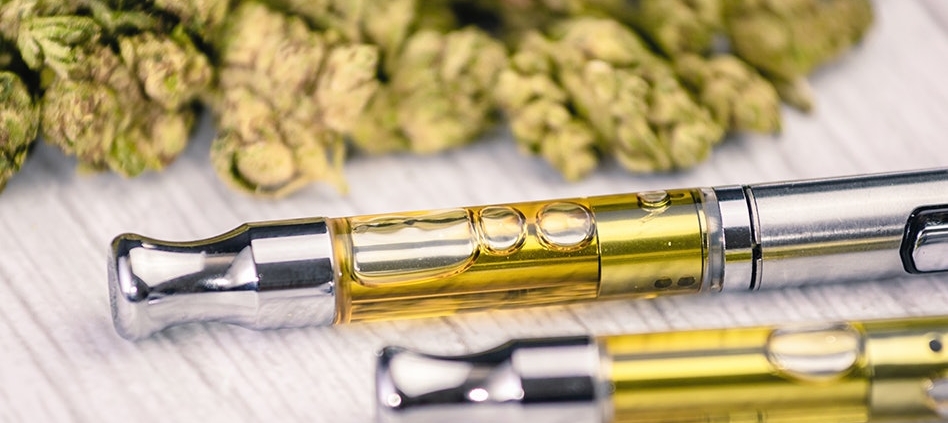
Kevin Kuethe, chief cultivation and production officer at Lume Cannabis in Michigan, has seen how the trade war has stalled the cannabis economy, mainly due to tariffs imposed on Chinese imports. “We’re starting to face a 2 or 3 cent increase per vape unit we sell to consumers, and we go through hundreds of thousands a month, so it can add up,” he says.
Thankfully, Lume’s supply chain team began working to foresee these price increases back in September, even though a new administration had yet to be announced. “We predicted that a new presidency would lead to some trade issues, so we bought as many units as possible before the tariffs came into effect,” Kuethe says.
He adds how Michigan’s competitive cannabis market doesn’t afford Lume the flexibility to increase prices for consumers, and he doesn’t estimate any price bump in the near future rippling down to end users. Michigan’s average adult-use flower price at retail dipped to an all-time low of $65.21 per ounce in February, according to the state’s Cannabis Regulatory Agency.
On the cultivation side, a major expense has been nutrient salts, which Kuethe says many of his competitors source from China. But for years, Lume has bought these salts from Israel, which now faces a 17% tariff rate, according to Trump’s April 2 announcements. Still, it’s far less than the tariff increase imposed on China.
 Courtesy of Jaunty
There has been some buzz around vape manufacturers sourcing materials in countries outside of China, but Guarino says that isn’t realistic. “Right now, there isn’t a top supplier setting up a factory headquarters in, say, Indonesia or Malaysia, but maybe that’s a longer-term plan,” he says.
But it appears importing from those countries will be a headache, too: On April 2, Trump slapped Indonesia with reciprocal tariffs at a rate of 32% and Malaysia with a rate of 24%.
Kuethe echoes Guarino by adding how the cannabis sector will have to transition to new prices if the trade war stretches into 2027, so much so they’ll have to shift their supply chain “from all angles and find different manufacturers in different countries who offer lowest costs and maintain the high quality of what’s needed. Searching for those manufacturers is already happening now.”
In Unprecedented Moment, ‘Cannabis Industry Has to Be in Lockstep’
In the meantime, inputs slapped with tariffs will force a company’s hand. Guarino says his company is absorbing the sticker shock, but he doesn’t see that kind of approach extending much longer. “At some point, that increase is going to filter down to the consumer if the cost approaches around $2 per unit as opposed to the 80 cents we are paying now,” he says.
According to Greentank Technologies, which supplies Jaunty with its hardware, the level playing field all vape companies are facing now eases the burden somewhat, as practically every vape manufacturer sources materials from China. However, as a Canadian company, Chief Revenue Officer Peter Machalek has seen the “Buy Canada” approach bring more clients to Greentank.
“Canadian brands are coming to us because of that patriotism and because they know they’ll get a full-service operation with us,” Machalek says.
He thinks it’s unrealistic for Trump and his supporters to believe that a made-in-America message will emerge from these tariff announcements. “There’s only one direction the prices will go if vapes are made in America, and that’s up,” Machalek says. “When consumers are used to paying X, they sure aren’t going to pay twice that amount.”
Kuethe notes how a key change in supply chain sourcing must be unified across the board. “The cannabis industry has to be in lockstep, sourcing a new input from somewhere else where the trade war isn’t an issue, or the rate is lower, and you can’t just have a couple of companies do it,” he says. “The only time businesses really move together is when they’re forced to, and that looks like it’s happening now.”
One more nuance of this trade war is how new builds will be reconsidered. Kuethe says that while Lume isn’t interested in constructing any new grows or plants, he wouldn’t be surprised to see the sector move away from adding more buildings to their operations. “Most of those construction materials come from Canada, so I doubt anyone would want to pay that high price right now,” he says.
National Pride Goes a Long Way to Help the Bottom Line
For some ancillary businesses in the cannabis sector, the “Buy American” mantra has been stabilizing their bottom line. Ron Basak-Smith, CEO of Sana Packaging, says his company’s sustainable solutions and domestic manufacturing base have allowed it to lower costs by 15% and stay competitive amid the trade war.
 Courtesy of Sana Packaging
“For us, it’s the status quo right now since less than 1% of our raw materials are coming from China,” he says.
For cannabis businesses stuck in the muck of this trade war, the future is hazy.
“The biggest concern is how unpredictable this administration is, and what they’re doing with tariffs doesn’t seem calculated in any way,” Guarino says. “It’s already challenging enough to run a cannabis business in the U.S., with tight margins and all the regulation. We need a stable business environment, and we’re not getting it.”


Leave a Reply
Want to join the discussion?Feel free to contribute!