
Just what is the INCB and who | How to buy Skittles Moonrock online
Learn how to buy marijuana online. TOP QUALITY GRADE A++
Cannabyss Inc. is the best place online to buy top quality weed, cannabis, vape, marijuana and CBD products. Get your borderless orders delivered at the pickup spot with ease. Top Grade products for client satisfaction.
👉 Click here to Visit our shop! 🛒
The International Narcotics Control Board (INCB) is an independent, quasi-judicial, 13-member expert body established by the UN Single Convention on Narcotic Drugs of 1961 to monitor compliance with international drug control treaties. Based in Vienna, it works to ensure that controlled substances are available for medical use while preventing diversion into illicit channels.
Key Aspects of the INCB Board
- Composition: 13 members elected by the Economic and Social Council (ECOSOC) for 5-year terms, serving in their personal capacity rather than as government representatives.
- Functions:
- Monitors government compliance with the three international drug control conventions.
- Assesses substances for potential control.
- Manages estimates and statistics on licit drug manufacturing and consumption.
- Reporting: Publishes an annual report on the global drug control situation.
The board consists of experts in pharmacology, medicine, and law, ensuring a technical approach to international drug policy supervision
Source: Google
Detail
The International Narcotics Control Board (INCB) is an independent treaty body, one of the four treaty-mandated bodies under international drug control law (alongside the Commission on Narcotic Drugs, UNODC on behalf of the Secretary-General, and the WHO).[[1]
The INCB is responsible for monitoring the control of substances pursuant to the three United Nations drug control conventions and for assisting Member States in their efforts to implement those conventions.[[2] It plays an important role in monitoring the production and trade of narcotics and psychotropics, as well as their availability for medical and scientific purposes, and in deciding which precursors should be regulated.[[3]
History
The Board has predecessors since the League of Nations. Following the 1909 Shanghai International Opium Commission, the Second International Opium Convention was adopted in 1925 and established the Permanent Central Opium Board (PCOB) which started its work in 1928. Later on, the 1931 Convention created the Drug Supervisory Body to gather estimates, in complement of the PCOB.[[4][[5]
After the dissolution of the League of Nations in 1946, the Lake Success Protocol Amending the Agreements, Conventions and Protocols on Narcotic Drugs transferred the powers and mandate of both Permanent Central Opium Board and Drug Supervisory Board to a specially-created joint body to administer the estimate system. The functions of both bodies were merged into the current INCB with the adoption of the Single Convention on Narcotic Drugs in 1961, and those bodies were superseded when the INCB began its functions on March 2, 1968.[[6]
Initially, the composition of the INCB under the Single Convention was strongly influenced by the 1946 Protocol. It inherited mechanisms of nomination from the League of Nations and Office International d’Hygiène Publique.
The mandates and functions of the INCB were later complemented with the adoption of the Convention on Psychotropic Substances in 1971 and the UN Convention Against Illicit Traffic in Narcotic Drugs and Psychotropic Substances in 1988.
| Abbreviation | INCB |
|---|---|
| Predecessor | Permanent Central Opium Board and Drug Supervisory Board |
| Formation | 1968; 58 years ago |
| Founded at | Geneva, Switzerland |
| Type | Treaty body |
| Legal status | Active |
| Purpose | Treaty body of the 1961 Convention, 1971 Convention, and 1988 Convention |
| Headquarters | Vienna International Centre (Vienna, Austria) |
| Membership | 13 Board Members |
President | Sevil Atasoy |
Secretary | Stefano Berterame (ad’interim) |
Main organ | Board |
| Website | incb |
Wikipedia
They have a new website https://www.incb.org/incb/index.html
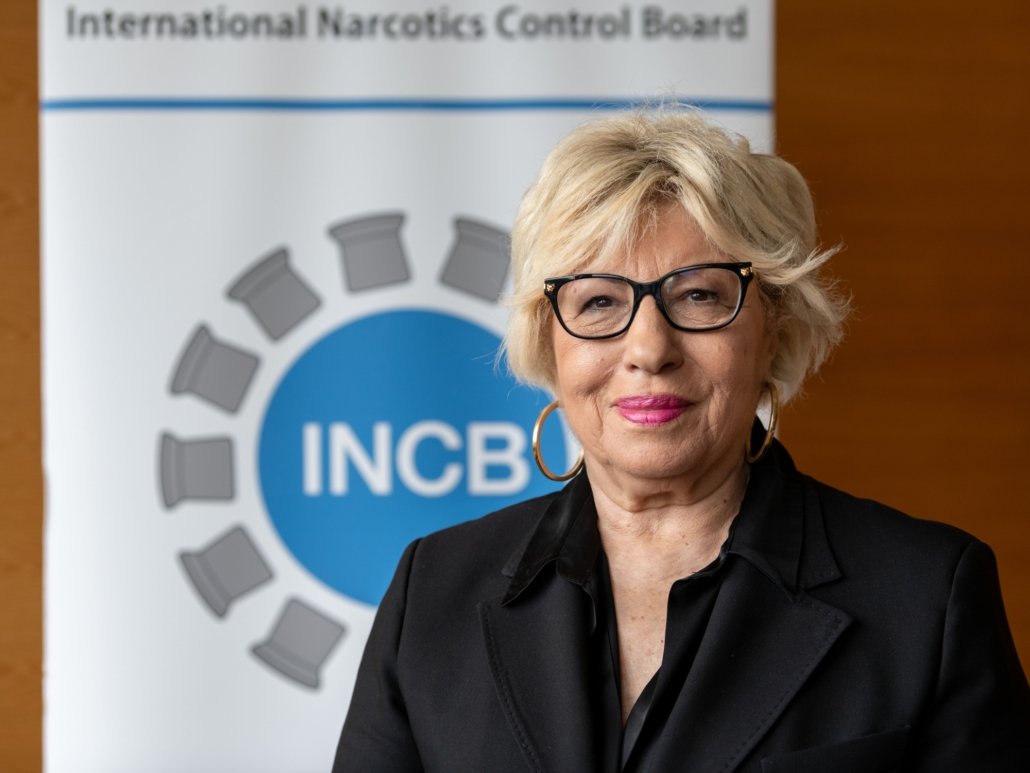
This is the INCB president she’s entrenched on the board having been a member since 2005
She says
The International Narcotics Control Board (INCB) is the independent and quasi-judicial monitoring body for the implementation of the United Nations international drug control conventions. It was established in 1968 in accordance with the Single Convention on Narcotic Drugs, 1961. It had predecessors under the former drug control treaties as far back as the time of the League of Nations.
H. H. Sevil Atasoy INCB President
What does she say about Cannabis?
In 2018
“The liberalization of recreational cannabis is worrying”
Prof. Dr. Sevil Atasoy evaluated Canada’s C-45 Law, which liberalizes the use of cannabis for recreational purposes. “Prof. Dr. Sevil Atasoy said, “The C-45 Act is contrary to the 1961 Single Convention on Narcotic Drugs, which Canada is a signatory to and which allows the production, manufacture, import, export, distribution and trade of drugs for scientific and medical purposes only.” Prof. Dr. Sevil Atasoy expressed that she is concerned about the damage this political choice will cause on the health of future generations, especially the youth of Canada.
Üsküdar University Vice Rector and UN International Drug Control Board (INCB) Member and Prof. Dr. Sevil Atasoy made important evaluations about Canada’s C-45 Law, which legalized the use of recreational cannabis on October 17, 2018.
“The C-45 Law is contrary to the 1961 Single Convention on Narcotic Drugs”
“Canada legalized the use of cannabis (marijuana) for recreational purposes with the C-45 law passed on October 17, 2018. This practice contradicts the conventions that member states of the United Nations are obliged to abide by.” Prof. Dr. Sevil Atasoy said, “The C-45 Law is contrary to the 1961 Single Convention on Narcotic Drugs, which Canada has also signed, which allows the production, manufacture, import, export, distribution and trade of drugs only for scientific and medical purposes.”
Prof. Dr. Sevil Atasoy: “Canada’s decision is worrying for future generations”
Prof. Dr. Sevil Atasoy, who is a member of the UN International Narcotics Control Board (INCB), which oversees the implementation of the conventions, stated that the Government of Canada did not fulfill its legal and political obligations with this behavior, that it hindered the fight against drugs at the international level and that she is concerned about the damage this political choice will cause on the health of future generations, especially the youth of Canada.
INCB Board to continue talks with Canada
Prof. Dr. Sevil Atasoy, who served as a Member and Chairperson of the UN International Drug Control Board between 2005 and 2010, said: “The UN International Drug Control Board will continue its consultations with the Government of Canada on this serious issue and will examine the issue at its 123rd session to be held in Vienna between 30 October – 16 November 2018.” and gave the following information about the board:
https://npistanbul.com/en/the-liberalization-of-recreational-cannabis-is-worrying
Canna Reporter profiled Atasoy 29 May 2025
Who is Sevil Atasoy?
Sevil Atasoy is a university professor and a renowned Turkish forensic scientist, internationally recognized for her contributions in the fields of forensic medicine, toxicology, forensic genetics and drug control policy.
Born in Istanbul on February 25, 1949, Sevil Atasoy completed her studies at the Deutsche Schule Istanbul and the Faculty of Chemistry at Istanbul University. She later obtained her PhD in Medical Sciences from the Cerrahpaşa Faculty of Medicine at the same university, specializing in biochemistry. Throughout her academic career, she has taught and supervised more than 50 master’s and doctoral theses in the fields of biochemistry and forensic science.
From 1980 to 1993, Sevil Atasoy was the Chair of the Chemical Analysis Department of the Turkish Institute of Forensic Medicine. From 1987 to 2005, she was the Director of the Institute of Forensic Medicine at Istanbul University. In addition, she has served as an expert witness in civil and criminal courts since 1980. Her international experience includes fellowships and visiting positions at renowned institutions such as the FBI, the California Criminal Investigation Institute, and universities in the United States and Germany.
Atasoy was a member of the INCB from 2005 to 2010 and from 2017 to 2022, and was re-elected for the period from 2022 to 2027. During the 143rd session of the INCB, on 22 May 2025, she was elected President of the Board for a one-year term, becoming the first Turkish citizen to hold such a position.
In addition to her academic and professional career, Sevil Atasoy is known for her work in the media, where she popularized forensic science in Turkey. She was the narrator of the television series “Kanıt” (Evidence), broadcast between 2010 and 2013, where she presented real cases and explained forensic techniques, always with the phrase “There is no such thing as a perfect crime”. She also presented programs such as “Crime and Evidence” on CNN Türk and “Bizarre Works” on HaberTurk.
Included in the list of the 23 most famous female forensic scientists in the world, ranking 14th, Atasoy is the only Turkish woman to appear in this ranking. Her work has contributed significantly to the development of forensic laboratories and evidence collection processes in Turkey.
Criticism of the position of the new president of the INCB
Despite her international prestige and significant contributions to forensics and drug control, Sevil Atasoy has also faced criticism, mainly for maintaining a rigid and rigorous stance on the monitoring and control of substances considered illicit. Activists, researchers and advocates for drug policy reform see her as being too closed and conservative, failing to fully recognize the medicinal and social benefits of substances such as cannabis.
Atasoy has opposed the legalization or decriminalization of substances such as cannabis, advocating its prohibition, even for medicinal uses, in accordance with the 1961 Single Convention on Narcotic Drugs. This stance is seen by many as an obstacle to the advancement of public policies based on scientific evidence and human rights. Organizations such as the Global Commission on Drug Policy and the Latin American Drug Justice Network have criticized the INCB for its lack of flexibility and for failing to consider local realities and scientific advances in addressing substance use.
Accusations of lack of transparency
The INCB is also the target of criticism for its lack of transparency and participation mechanisms. Reports of the London School of Economics pointed out that the INCB is one of the most closed entities in the United Nations system, with deliberative processes that are not accessible to non-governmental organizations or the general public. This lack of openness is seen as a challenge to the legitimacy of the institution and the effectiveness of its policies.
As a member of the INCB, Atasoy is at the center of these controversies. AtYour advocacy of strict substance control policies may be seen as outdated by those who advocate for more progressive, public health-based approaches. These criticisms reflect a broader debate about the effectiveness and fairness of international drug control policies, and the INCB’s role in this scenario remains a crucial point of discussion today.
LSE REPORT
Only in June 2025 she’s contributing to a paper with the title
“The Effect of Rap Music on Youth’ Drug Use: Turkish Rap Songs Perspective“
The abstract tells you all you need to know
In recent decades, technological developments that have increased communication channels among cultures on a global scale have contributed to the emergence and spread of various music genres. One of these is rap music, along with the hip-hop culture that has developed with it. Rap music, which often expresses reactions to social conditions and to a quest for identity, holds a significant place in the formation of subcultures, particularly among youth. Due to its rebellious ethos, rap music can influence the attitudes of young people toward drug use, in both positive and negative ways. Drug users, who break away from the dominant cultural norms of society, form a distinct drug-based subculture characterized by its own language, clothing styles, lifestyles, and musical preferences. Rap music, which is the focus of this study, is considered a subcultural form of music making with a unique identity. This research analyzes rap songs that both encourage and criticize the drug subculture. A total of fourteen songs, seven promoting and seven opposing substance use, were selected and analyzed using the content analysis method, with reference to their availability on YouTube. In conclusion, the study compiled statements from both groups that either reflect or criticize drug use.
There’s all the usual tropes that i could fill an entire book with. Here’s a couple
This fight will not end!
Prof. Dr. Sevil Atasoy said, “The fight against drugs is a never-ending struggle” and added, “For thousands of years people have been using different substances for different reasons. Because the human brain is not self-sufficient. It is necessary to teach society and young people to achieve well-being in other ways, such as through sports.” Prof. Dr. Sevil Atasoy stated that countries do not want their names to be mentioned in this report and said, “The biggest goal is to be mentioned less in the report. We see places where Turkey’s name is mentioned, but the vast majority of these are good things.”
Turkey is facing serious trafficking of the drug “skunk”, a more potent form of cannabis. In 2017, 6.5 tons of skunk were seized, a four-fold increase compared to the previous year,
According to the authorities, the origin of Skunk is Europe, mainly the Netherlands, and the substance reaches Turkey via Central and South-Eastern Europe (mainly Greece)
and so on and so forth
Her term ends May 2027

INCB Secretariat and Board Members
Current Board Members
César T. ARCE RIVAS

Nationality: Paraguay
Quotes / Background
Arce Rivas has been a key figure in shaping Paraguay’s legal and scientific stance on cannabis:
- Drafting Legislation: He was a primary drafter of Paraguay’s medical cannabis law, which regulates the cultivation and industrial production of cannabis for therapeutic purposes.
- Scientific Stance: He has frequently addressed the scientific basis of medical cannabis use in international forums, emphasizing the need for evidence-based policies.
He previously served as the General Director of National Cooperation for Paraguay’s drug control agency (SENAD) and has a background as a forensic doctorate and former prosecutor.
Term Ends: 9 April 2030
Sawitri ASSANANGKORNCHAI

Nationality: Thailand
Quotes / Background
Sawitri Assanangkornchai, a prominent Thai researcher and Professor of Epidemiology, has authored numerous studies concerning cannabis legalization, medical usage, and public health in Thailand. Her research often highlights the tension between medical benefits and public health risks
- Unprepared Healthcare System: She has pointed out that during early legalization, the “healthcare system was unprepared to prescribe cannabis” and products were both “few… and expensive,” which drove users to unlicensed providers.
- Escalation of Use: Regarding the 2019 policy shift, she observed it “markedly changed cannabis use patterns and perceived levels of risk,” leading to a “rapid escalation in the cannabis consumption either for medical or recreational purpose
- The Need for Monitoring: Assanangkornchai emphasizes that because effects are mixed, “further monitoring and evaluation research is needed to provide longer-term evidence and a more comprehensive understanding” of legalization’s impact.
- Deeply Rooted Tradition: She highlights that “Thai people have recognized cannabis as a medicinal herb for centuries,” with it being integrated into “16 traditional medicine recipes and certain dishes”.
- Safety Concerns: Despite traditional roots, she notes a lack of “sufficient information regarding the cannabis use patterns of patients with chronic disease” or how it alters their modern “disease management”
Term Ends: 9 April 2029
Cornelis P. DE JONCHEERE

Nationality: Netherlands
Quotes / Background
Born in 1954. National of the Kingdom of the Netherlands. Currently Chair of the Netherlands Antibiotics Development Platform and a consultant to WHO on pharmaceutical policies.
Doctor of Pharmacy (PharmD) and Master of Science (MSc) in Pharmacy, University of Groningen and University of Amsterdam, Kingdom of the Netherlands (1975-1981); Master’s in Business Administration, University of San Diego, United States/San José, Costa Rica; Bachelor of Science (BSc). Pharmacy, cum laude (honour student), University of Groningen, Kingdom of the Netherlands (1972-1975).
Previously held positions as Director, Department of Essential Medicines and Health Products at WHO, Geneva (2012-2016), which included work on access to controlled medicines, and the WHO Expert Committee on Drug Dependence; WHO Representative, Kyiv (2011-2012); WHO Regional Adviser for Pharmaceuticals and Health Technologies, WHO Regional Office for Europe, Copenhagen (1996-2010); National Essential Drugs Programme Coordinator, Pan American Health Organization (PAHO)/WHO, Brazil (1994-1996); Pharmacist, Essential Drugs Projects Coordinator, PAHO/WHO, Costa Rica (1988-1993); Pharmaceutical expert, PAHO/WHO, Panama (1986-1988); pharmaceutical supply expert in North Yemen, Ministry of Foreign Affairs, Directorate for International Cooperation, Kingdom of the Netherlands (1982-1985); hospital and community pharmacy in Amsterdam (1981-1982).
- On Recreational Legalization: He stated that “INCB remains concerned about the legislative developments in a small number of countries permitting the use of cannabis for ‘recreational’ use,” and that these developments are contrary to treaty commitments.
- On Compliance: He also urged those countries to return to meeting their treaty obligations.
“The legalization of the use of cannabis for non-medical purposes… is incompatible with the legal obligations of States parties to the international drug control conventions.”
“The Board is concerned about the impact of these developments, particularly on young people, and on the message that they convey about the risks associated with cannabis use.”
De Joncheere emphasized that while the INCB supports medical and scientific use of cannabis, recreational legalization undermines the 1961 Single Convention on Narcotic Drugs. He often urged countries to return to meeting their treaty obligations and expressed concern that commercialization of cannabis could prioritize profit over public health
Term Ends: 5 April 2027
David T. JOHNSON

Nationality: USA
Quotes / Background
Born in 1954. National of the United States. President, SwanJohnson LLC; adjunct faculty member, Arizona State University; retired diplomat. Bachelor’s degree in economics from Emory University; graduate of the National Defence College of Canada.
United States Foreign Service officer (1977-2011). Assistant Secretary for the Bureau of International Narcotics and Law Enforcement Affairs, United States Department of State (2007-2011). Deputy Chief of Mission (2005-2007) and Chargé d’affaires, a.i. (2003-2005), United States Embassy, London. Afghan Coordinator for the United States (2002-2003). United States Ambassador to the Organization for Security and Cooperation in Europe (1998-2001). Deputy Press Secretary at the White House and Spokesman for the National Security Council (1995-1997). Deputy Spokesman at the State Department (1995) and Director of the State Department Press Office (1993-1995). United States Consul General, Vancouver, Canada (1990-1993). Assistant National Trust Examiner, Office of the Comptroller of the Currency, United States Treasury (1976-1977).
Member of the International Narcotics Control Board (since 2012)
Johnson has stated that the trend toward legalizing recreational cannabis is a major concern because it “represents a significant challenge to the universal implementation of the treaties”. He maintains that the 1961 Single Convention limits the use of cannabis “exclusively to medical and scientific purposes”.
- He frequently highlights the health consequences of wider cannabis use, particularly for youth. In various reports, he has noted that “marketing and sale of cannabis-based products in a way that appeals to young people” is of particular concern, as is the “declining perception of harms” despite increasing product potency.
- Failure of Legalization Goals: Johnson has argued that jurisdictions legalizing the drug have not met their stated objectives, such as eliminating illicit markets. He noted in 2023 that “legalizing jurisdictions have not been able to achieve the goals they had pursued through legalization of cannabis for recreational purposes”.
- Balance Between Health and Law: While opposing recreational use, he has expressed support for a balanced approach that ensures the availability of controlled substances for medical needs, stating that “safeguarding health and welfare is at the heart of the three international drug control conventions”
Term Ends: 20 April 2027
Galina A. KORCHAGINA

Nationality: Russian Federation
Quotes / Background
Born in 1953. National of the Russian Federation. Professor, Deputy Director of the National Centre for Research on Drug Addiction (since 2010).
Graduate of the Leningrad Paediatric Medical Institute, Russian Federation (1976); Doctor of Medicine (2001). Thesis based on clinical and epidemiological research dealing with new ways of looking at management of drug abuse in a time of change.
Previously held positions as paediatrician at the Central District Hospital of Gatchina, Leningrad region, and doctor at a boarding school (1976-1979); Head of the Organizational and Policy Division, Leningrad Regional Drug Clinic (1981-1989); Lecturer, Leningrad Regional Medical Academy (1981-1989); Head Doctor, City Drug Clinic, St. Petersburg (1989-1994); Assistant Lecturer (1991-1996) and Professor (2000-2001), Department of Social Technologies, State Institute for Services and Economics; Assistant Lecturer (1994-2000), Associate Professor (2001-2002) and Professor (2002-2008), Department for Research on Drug Addiction, St. Petersburg Medical Academy of Postgraduate Studies; Chief Professor and Head of the Department for Medical Research and Healthy Lifestyles, Herzen State Pedagogical University of Russia (2000-2008); Professor, Department for Conflict Studies, Faculty of Philosophy, St. Petersburg State University (2004-2008).
- Concern over Liberalization: She has consistently supported the INCB’s position that the legalization of cannabis for non-medical purposes in various jurisdictions is a violation of international drug control treaties.
- Health Impacts: In her capacity as a medical expert and psychiatrist, she often emphasizes the potential negative health outcomes of high-potency cannabis, particularly among youth.
- Scientific and Medical Use Only: Korchagina advocates for the strict limitation of cannabis use to medical and scientific purposes, as outlined in the 1961 Convention, and warns against “medical” programs that lack proper regulatory oversight.
- The “Legalization Paradox”: She has participated in discussions highlighting that legalization may not eliminate the illicit market but rather create a parallel “gray market” that continues to pose risks to public safety.
Term Ends: 20 April 2027
Pierre LAPAQUE

Nationality: France
Quotes / Background
Born in 1958. National of France. Master’s degree in public law from the University of Toulon and the Var, France.
Previously held positions as Regional Director of the United Nations Office on Drugs and Crime (UNODC) for the Andean Region and the Southern Cone (Argentina, Chile, Colombia, Ecuador, Paraguay, Peru, Uruguay) (January 2022); UNODC Representative for Colombia (2019-2021); UNODC Regional Representative for West and Central Africa, Dakar (2012-2021); Chief, Implementation Support Section, Organized Crime and Illicit Trafficking Branch, UNODC, Vienna (2010-2012); Chief, Law Enforcement, Organized Crime and Anti-Money-Laundering Unit, UNODC, Vienna (2009-2010); Attaché for Internal Security at the Embassy of France in Portugal (2005-2009); Senior adviser, Inter-American Drug Abuse Control Commission, Organization of American States, Washington, D.C. (2002-2005); Deputy Director of the Caribbean Financial Action Task Force (Trinidad and Tobago) (1999-2002); Head of various operational services in the French criminal investigation police (ranks ranging from Inspector of Police to Commissioner General of Police) (1982-1998).
Drafter and contributor to “Le Groupe d’action financière des Caraïbes (GAFIC)”, in the journal of INTERPOL, 2000.
Spoke on drugs, money-laundering, transnational organized crime and the financing of terrorism at several international forums (Financial Action Task Force, Group of Seven under the Presidency of the United Kingdom of Great Britain and Northern Ireland, Dakar Forum on organized crime in Africa) (since 1999); presented the work of UNODC at meetings of the Commission on Narcotic Drugs and the Commission on Crime Prevention and Criminal Justice (2009-2022); spoke at meetings of the Inter-American Drug Abuse Control Commission of the Organization of American States (General Assembly and Permanent Council) on developments related to drugs and the laundering of criminal assets in the Americas (2002-2005); and presented, as team leader, 13 mutual evaluations by member countries of the Caribbean Financial Action Task Force (1999-2002). Honours: Order of San Carlos at the level of Grand Cross (Colombia, June 2022).
Member of the International Narcotics Control Board (since 2023)
- Conflict with International Treaties: Lapaque has consistently highlighted that the legalization of cannabis for non-medical purposes is a violation of the 1961 Single Convention on Narcotic Drugs. He has stated that “the legalization of cannabis for non-medical purposes is a violation of the international drug control legal framework”.
- Public Health Concerns: He emphasizes the health risks of cannabis, particularly for young people, noting that increased availability can lead to higher rates of addiction and other health issues.
- Impact on Law Enforcement: Lapaque argues that legalization does not necessarily eliminate the illicit market but may instead complicate law enforcement efforts and provide a facade for criminal organizations.
- The Persistence of Supply: He has noted that law enforcement alone cannot solve the drug problem, stating that even if all drugs were seized today, “the same amount of drugs – hundreds of tons of heroin, cocaine and cannabis – would be produced again next year”.
Term Ends: 9 April 2029
Lin LU

Nationality: China
Quotes / Background
Born in 1966. National of China. Member, Chinese Academy of Sciences; Professor/Director, National Institute on Drug Dependence, Peking University; Professor/Director, Peking University Sixth Hospital/Institute of Mental Health; Director/Professor, National Center for Mental Disorders, China; Professor/Director, National Clinical Research Center for Mental Disorders, China; President, Shandong First Medical University.
Doctor of Medicine and Doctor of Philosophy (PhD) in Psychiatry, West China University of Medical Science, China.
Previously held positions as Research Scientist, National Institute on Drug Abuse of the National Institutes of Health, United States (2003-2006); Postdoctoral Fellow, National Institute on Drug Abuse of the National Institutes of Health, United States (2001-2003).
Author of and contributor to more than 400 peer-reviewed articles and dozens of textbooks and clinical guidelines, with his research primarily focusing on neurobiological mechanisms, clinical interventions, and public health policies pertaining to drug addiction and psychiatric disorders.
Made substantial contributions to the advancement of addiction research and mental health promotion in China and Asia, and worldwide, as President of the Chinese Society of Psychiatry, Chairman of the Expert Committee on Drug Abuse Prevention and Control of the National Narcotics Control Commission of China.
His perspectives generally focus on the medical and social risks associated with drug use in China. Key insights from his research and statements include:
- Drug Addiction as a Brain Disease: Lu emphasizes that drug addiction, including to substances like cannabis, is a “chronic brain disease” that imposes substantial burdens on patients and society.
- Challenges of Psychological Dependence: He notes that addiction is difficult to eradicate because of its psychological dependence, where environmental cues or past partners can trigger intense drug cravings and lead to relapse.
- Need for Mental Interventions: Lu advocates for moving beyond purely pharmacological methods to include “mental interventions and environmental influence” in treating addiction.
Term Ends: 20 April 2026
Emmanuel B. K. LUYIRIKA

Nationality: Uganda
Quotes / Background
Born in 1965. National of Uganda. Executive Director of the African Palliative Care Association (APCA).
Master of Public Administration (MPA) with majors in Project Management and Policy Informatics – thesis on the implementation of the national HIV/AIDS policy in South Africa, School of Public Management and Planning, University of Stellenbosch (2003); Post graduate Honours Degree in Public Administration (BPA) Hons., School of Public Management and Planning, University of Stellenbosch, South Africa (2002); Master of Family Medicine (M FAM MED), thesis on HIV among school going teenagers, Medical University of Southern Africa, MEDUNSA, South Africa (2000); Bachelor of Medicine Bachelor of Surgery (MB, ChB), at Makerere University, Kampala Uganda (1992).
- On Government Policy and Drug Control:
“I believe that drugs have destroyed many lives, but wrong government policies have destroyed many more.” - On the Need for Balanced Regulation:
Discussing the challenge of making essential medicines available while preventing misuse, he has noted that many countries are “more focused on the control of the medicine than the necessity of making it available for medical and scientific use”. - On Access to Pain Relief as a Right:
“Leadership needs to prioritize spreading the political and policy message that palliative care is not a luxury for the few but a fundamental human right”. - Dr. Luyirika’s work often involves the development of model guidelines for controlled medicines, which provide a framework for African nations to adapt their laws to include substances like medical cannabis and opioids for clinical use
Term Ends: 29 July 2029
Jagjit PAVADIA

Nationality: India
Quotes / Background
Born in 1954. National of India. Graduate in English Honours (1974), Dhaka University, LLB from Delhi University (1988), Master’s Diploma in Public Administration, Indian Institute of Public Administration (1996). Completed dissertation “Forfeiture of property under the Narcotics Drugs and Psychotropic Substances Act, 1985” towards completion of Master’s Diploma.
Held several senior positions in the Indian Revenue Service for 35 years in the Government of India, including Narcotics Commissioner of India, Central Bureau of Narcotics (2006-2012); Commissioner, Legal Affairs (2001-2005); Chief Vigilance Officer, Power Finance Corporation (1996-2001); Customs Training Adviser Maldives, deputed by the Commonwealth Secretariat (1994-1995); Deputy Director, Narcotics Control Bureau (1990-1994); and retired as Chief Commissioner, Customs, Central Excise and Service Tax, Nagpur, in 2014.
Recipient of Presidential Appreciation Certificate for Specially Distinguished Record of Service on the occasion of Republic Day (2005), published in the Gazette of India Extraordinary.
Member of the Indian delegation to the Commission on Narcotic Drugs, Vienna (2007-2012); introduced resolutions 51/15 (2008) and 53/12 (2010), adopted by the Commission on Narcotic Drugs, and organized a side event on the margins of the Commission’s 2011 session, presenting issues involved in the illegal movement of opium poppy seeds to producing, importing and exporting countries. As representative of the competent national authority, attended Project Prism and Project Cohesion task force meetings (2006-2012), and coordinated and organized the Project Prism and Project Cohesion meeting in New Delhi (2008). Participated in the Thirtieth Meeting of Heads of National Drug Law Enforcement Agencies, Asia and the Pacific, held in Bangkok (2006), and organized the Thirty-fifth Meeting of Heads of National Drug Law Enforcement Agencies, Asia and the Pacific, held in Agra, India (2011). Member of the INCB advisory expert group on the scheduling of substances (2006), and member of the advisory group finalizing the INCB Guidelines for a Voluntary Code of Practice for the Chemical Industry (2008). Rapporteur of the Subcommission on Illicit Drug Traffic and Related Matters in the Near and Middle East at its forty-first session, held in Amman (2006); Chair of the Subcommission at its forty-second session, held in Accra, India (2007); organized the meeting of the Paris Pact Initiative Expert Working Group on Precursors, held in New Delhi (2011), and participated in the International Drug Enforcement Conferences hosted by the Drug Enforcement Agency of the United States, held in Istanbul, Türkiye (2008) and Cancún, Mexico (2011).
Member of the International Narcotics Control Board (since 2015)
- “This is a major cause for concern as is the way the harms associated with using high-potency cannabis products are being played down”.
- On the impact of legalization on youth: She has noted that studies in the United States indicate higher cannabis consumption among adolescents and young adults in states where it is legalized recreationally compared to states where it remains illegal.
- On marketing and “eye-catching” products: Pavadia has warned about the cannabis industry using appealing packaging for products like “edibles” and vaping products, which she believes targets young people and downplays the drug’s effects.
- On social media and influencers: She has expressed concern about social media influencers promoting cannabis, heroin, and other controlled substances, and has called on governments and tech companies to address this issue on their platforms.
Term Ends: 9 April 2030
N. Larissa RAZANADIMBY

Nationality: Madagascar
Quotes / Background
Born in 1988. National of Madagascar. Head of the Division for the importation of products under international control and customs clearance of donated health products, Department of Health Products Management, Directorate of Pharmacy, Laboratories and Traditional Medicine of the Ministry of Public Health of Madagascar (2014-2021).
Pharmacist, Graduate of the Faculty of Medicine, Specialization in Pharmacy, University of Antananarivo, Madagascar.
Previously, manager of the medical products storage warehouse of the Department of Pharmacy, Laboratories and Traditional Medicine, Ministry of Public Health (2014-2015); consulting positions in the Biorama cosmetics laboratory in Antananarivo (2014); acting pharmacist at the Ankadifotsy Pharmacy, Antananarivo (2013).
Appointed Permanent Secretary of the Technical Unit in Logistics Management of the Ministry of Public Health (2016).
Member of the Council of the National Order of Pharmacists of Madagascar; member of the Board of Directors of the Solid Solutes Supply Unit in Madagascar (2019); member of the Commission for the opening and closing of drug depots intended for human use of the Ministry of Public Health; member of the Logistics Commission of the Ministry of Public Health; member of the Drafting Committee of the National Pharmaceutical Policy and the National Pharmaceutical Master Plan of Madagascar (2016).
Term Ends: 20 April 2026
Jallal TOUFIQ

Nationality: Morocco
Quotes / Background
Born in 1963. National of Morocco. Chief Medical Officer at Naufar Addiction Center in Doha, Qatar.
Medical Doctor, Rabat Faculty of Medicine (1989); Diploma of Specialization in Psychiatry (1994); lecturer at the Rabat Faculty of Medicine (since 1995). Undertook specialized training in Paris at the Sainte-Anne Psychiatric Hospital and Marmottan Centre (1990-1991) and at Johns Hopkins University, United States, as a research fellow and Clinical Observer of the National Institute on Drug Abuse of the United States (1994-1995). Conducted research at the University of Pittsburgh, United States (1995); gained clinical drug research certificates at the Vienna School of Clinical Research (2001 and 2002).
Previously held the position of Head of the National Centre for Drug Abuse Prevention and Research of Morocco; Director of the Moroccan National Observatory on Drugs and Addictions; Director of the Arrazi University Psychiatric Hospital and Professor of Psychiatry at the Rabat Faculty of Medicine. Former Head of the Harm Reduction Programme, National Centre for Drug Abuse Prevention and Research; teaching and residency training coordinator, Arrazi Hospital; Director of the National Diploma Programme on Treatment and Prevention of Drug Abuse, Rabat Faculty of Medicine; Director of the National Diploma Programme on Child Psychiatry, Rabat Faculty of Medicine, and member of the Ministry of Health Commission on Drug Abuse.
At the international level, Representative of the Mediterranean Network (MedNET) for Morocco (MedNET/Pompidou Group/Council of Europe); former permanent correspondent of the Pompidou Group for Morocco (Council of Europe) on drug abuse prevention and research and former member of the Reference Group to the United Nations on HIV and Injecting Drug Use. Founding member and steering committee member, Middle East and North Africa Harm Reduction Association (MENAHRA); Director of Knowledge Hub Arrazi for North Africa, MENAHRA; member, Mentor International Scientific Advisory Network (drug abuse prevention in youth); former focal point/expert on prevention, United Nations Office on Drug Control and Crime Prevention (local network for North Africa); founding member, MedNET (advisory group on AIDS and drug abuse policies) of the Council of Europe, and member of the Reference Group to the United Nations on HIV and injecting drug use.
Held consultancy roles with the WHO Regional Office for the Eastern Mediterranean, UNODC and other international institutions and research fellowships at the National Institute on Drug Abuse of the United States. Published widely in the field of psychiatry, alcohol and drug abuse.
- Categorization of Legalization: He has described the broad legalization of cannabis and psychedelics as “catastrophic,” arguing that it primarily serves private business interests rather than public welfare.
- Criticism of the Industry: He notes that an international legal drug industry is likely to “challenge public health regulations across the globe” and characterizes it as a potential “disaster” similar to the history of the tobacco and alcohol industries.
Toufiq argues against the idea that drug markets can be safely regulated through legalization.
- Regulation vs. Legalization: He has stated that the notion that we can “safely regulate and legalise all drugs” is “absurd and threatens international cooperation”.
- Definition of Drugs: In his capacity as a medical professional, he has emphasized the inherent risks of substances, stating, “Drugs are poison by definition”
- Infiltration by Cartels: He asserts that “Cartels will not stop when we legalise illegal industries, they just infiltrate legal industries and make policymaking on them corrupt”
Term Ends: 29 April 2030
Zukiswa ZINGELA

Nationality: South Africa
Quotes / Background
Born in 1969. National of South Africa. Associate Professor and Executive Dean, Faculty of Health Sciences, Nelson Mandela University, South Africa (since 2021).
Master of Medicine, Psychiatry (University of Pretoria); Fellow of the College of Psychiatrists of South Africa, PhD, Psychology (Nelson Mandela University).
Serves on the Medical and Dental Board of the Health Professions Council of South Africa and is also the Chairperson of the Health Committee of the Medical and Dental Board. Also serves as Deputy Chairperson of the Ministerial Advisory Committee on Mental Health.
Member of the steering committee for the establishment of rehabilitation for substance abuse (Ernest Malgas Youth Treatment Centre) (2012-2015); consultant, consultation committee on the implementation of the Prevention of and Treatment of Substance Abuse Act. Advised, on a voluntary basis, the Ernest Malgas Youth Treatment Centre on implementation of the Prevention of and Treatment of Substance Abuse Act and support for starting the rehabilitation programme (2015); established a mental health outreach programme for the Ernest Malgas Youth Treatment Centre offering assessment and interventions (since 2016); facilitated support from the Department of Health to the local drug action committee through the allocation of a multidisciplinary staff member (clinical psychologist) to serve on the committee (2014-2016).
As a member of the International Narcotics Control Board (INCB), her remarks often focus on the clinical risks and the “trivialization” of the drug’s effects.
Key quotes and viewpoints from Professor Zingela include her concern that the availability of legal cannabis products lowers the public’s perception of risk and negative consequences. She also notes that appealing packaging for products like edibles and vaped products contributes to the “trivialisation of the impacts of cannabis use in the public eye, especially among young people”. Furthermore, she points out that inaccurate labeling and unchecked access for children have resulted in negative outcomes like poisoning incidents. While not specific to cannabis, she has emphasized that clinical decisions should be based on clinical sense, regardless of political agendas
Term Ends: 9 April 2030


Leave a Reply
Want to join the discussion?Feel free to contribute!