
Your Dispensary’s Customer Data Isn’t Yours | Cannabis Law Report | Where to buy Skittles Moonrock online
Learn where to buy weed online. TOP QUALITY GRADE A++
Cannabyss Inc. is the best place online to buy top quality weed, cannabis, vape, marijuana and CBD products. Get your borderless orders delivered at the pickup spot with ease. Top Grade products for client satisfaction.
👉 Click here to Visit our shop! 🛒
When a cannabis operator decides to sell, bring on a partner, or switch platforms, they frequently discover the same thing: the customer data they assumed they owned lives primarily in someone else’s system.
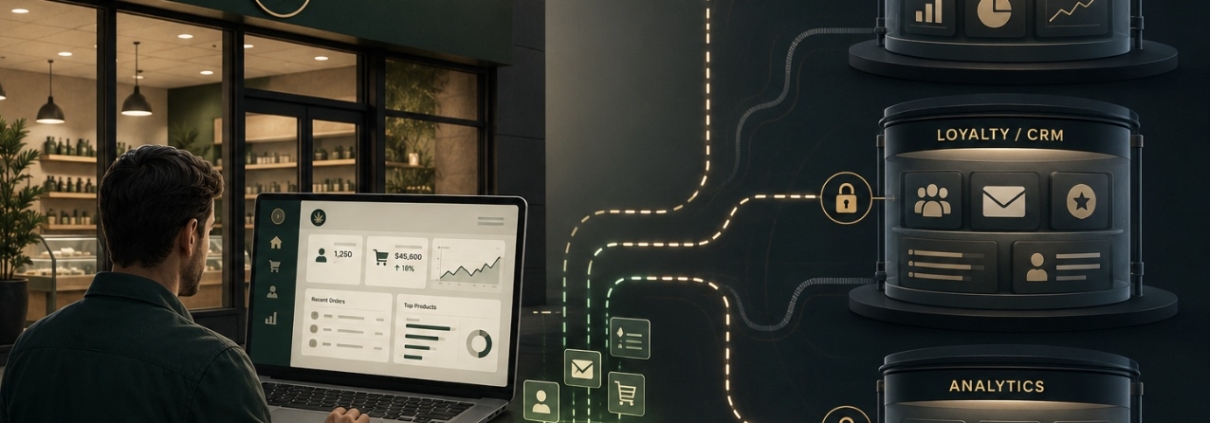
This isn’t a cybersecurity issue. It’s a structural one — and it plays out across three areas of the typical dispensary’s digital infrastructure.
The Menu Platform Problem
Most dispensaries don’t host their own online menus. They embed one from a third-party platform — Dutchie, Jane Technologies, Treez, and others. From the customer’s perspective, the shopping experience feels native to the dispensary. From a data ownership perspective, it often isn’t.
When a menu is embedded via iframe, customer interactions — product views, order history, behavioral signals — happen inside the vendor’s environment. The analytics data lives in their system. If the dispensary terminates that relationship, they lose access to years of behavioral data. In some configurations, the URL the customer is actually browsing doesn’t resolve to the dispensary’s domain at all.
This matters beyond marketing and SEO. It matters for valuation. A buyer performing due diligence on a $4M dispensary should be asking: what happens to that customer acquisition data when we move to a different POS?
The Loyalty and CRM Problem
Loyalty platforms like Springbig and Alpine IQ hold the dispensary’s subscriber lists, purchase histories, and behavioral segments. When set up correctly, this data is exportable and the operator maintains practical control. When set up incorrectly — or when vendor contract terms are vague — the dispensary may have no clean path to extract a usable subscriber file.
The more common version of this problem isn’t contractual. It’s operational. Many dispensaries send campaigns through these platforms but never build parallel infrastructure to own the relationship independently: a first-party email list with portable export, a subscriber file that doesn’t disappear when a vendor relationship ends. Most operators have never asked who actually controls that data until they need to move it.
The Website and Analytics Problem
First-party data — traffic, conversion behavior, customer journeys — requires active infrastructure to capture. That means a properly configured analytics platform with meaningful event tracking, UTM parameters that trace customer behavior back to its source, and a website that search engines can actually crawl and index.
A surprising number of cannabis websites — particularly those built quickly during license approval or acquired through franchise relationships — have none of this in place. There’s no analytics history to hand over in a sale. There’s no organic traffic baseline to defend. The customer base the operator believes they’ve built is visible only inside platforms they don’t control.

Why Attorneys Should Be Asking About This
Harris Sliwoskis’s guide to cannabis due diligence mechanics describes the standard process: requesting documents, reviewing regulatory compliance, conducting public records searches. Digital infrastructure rarely appears in meaningful detail. It should.
If you advise cannabis operators on acquisitions, exits, or partnership agreements, data ownership should be a standard line item in your diligence process. In practice, this means:
- Confirming who holds admin access to every platform in the target’s digital stack
- Requesting a test export of the loyalty subscriber list before closing
- Reviewing vendor agreements for data portability, termination provisions, and ownership language
- Verifying that the website domain, hosting, and analytics accounts are owned by the business entity being acquired — not a marketing agency, franchise, or third-party vendor
MJBizDaily’s recent analysis of cannabis M&A infrastructure put the right questions on the table: How does this asset draw customers without relying on discounts or constant promotions? What percentage of revenue comes from repeat buyers? Those questions are unanswerable without a data infrastructure the operator actually owns.
The Preventable Version of This Problem
None of this is technically complex. The data ownership gap in cannabis retail exists because most operators prioritize opening and compliance over infrastructure — which is rational, given the regulatory environment. But the compounding effect is that years of customer relationships become locked inside platforms the operator has no contractual guarantee to retain.
The fix is a properly structured owned digital foundation: a website and menu configuration that keeps behavioral data on the operator’s domain, a loyalty program configured for exportability, and analytics that capture first-party data from day one. LeafSuite’s Digital Dispensary Foundation is built around exactly this problem — ensuring operators own what they’ve built before a platform change, a partnership, or a sale reveals that they didn’t.
Whether an operator builds this infrastructure in-house, with a marketing partner, or with legal guidance during a transaction, the starting point is the same: ask who actually owns the data.


Leave a Reply
Want to join the discussion?Feel free to contribute!